
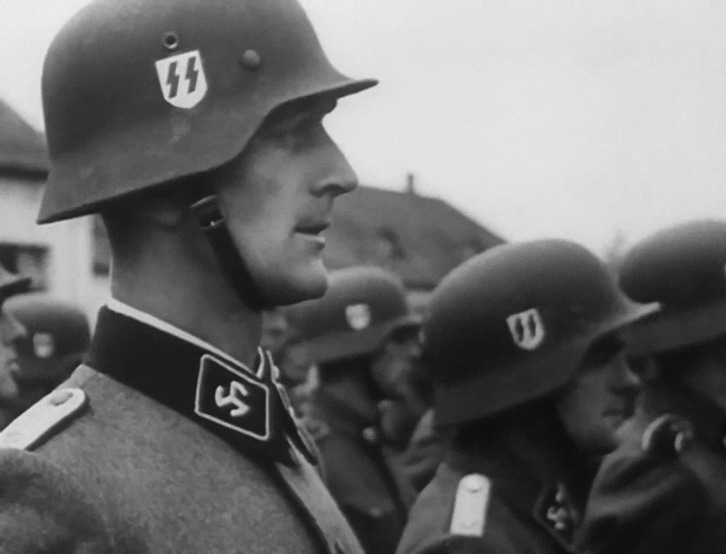
The daily life of the camp is shown here in a photograph. Frikorpset with Per Sørensen (later company commander and battalion commander in Regiment 24 “Danmark”) in front of his compatriots.
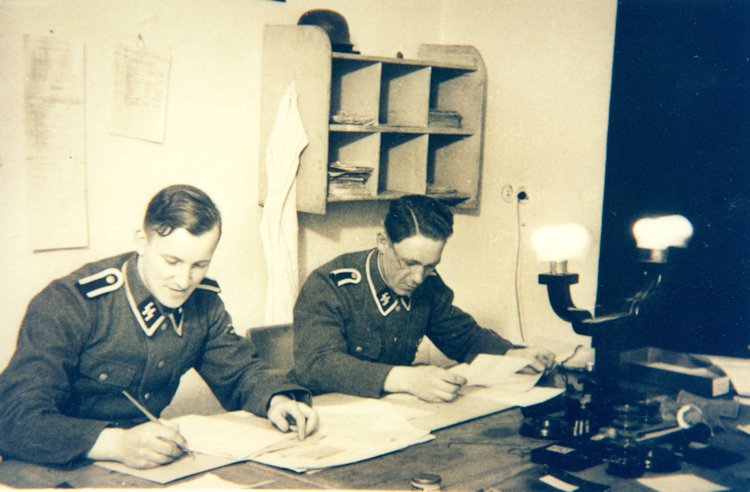
Photo from the battalion office, where initially two Germans handled the duties (attached from “Der Führer”), but later Danish personnel were also assigned. This is where daily administration took place, including document processing, fair-copying of orders, and the war diary.
The Warta River runs through the training area and was frequently used for exercises.
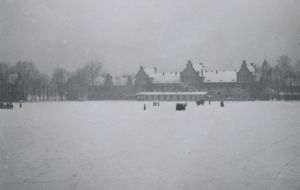
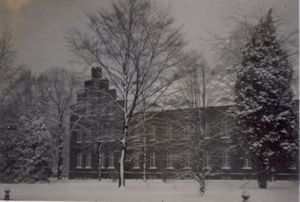
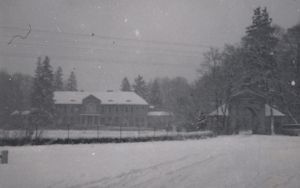
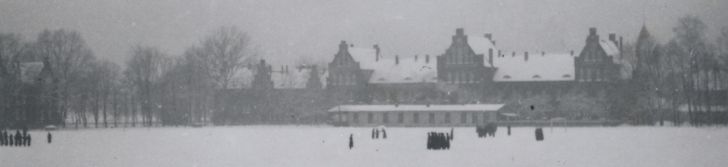
The Treskau barracks in the winter of 1941/42. During this winter, a disaster occurred when the stored potatoes and cabbage froze, forcing the troops to subsist on starvation rations for the remainder of the winter.
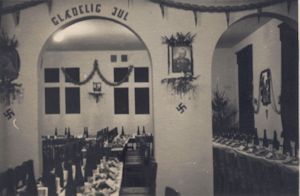
In the monastery’s large halls beneath the building, a dining hall had been set up, which was decorated for a Christmas event in 1942.
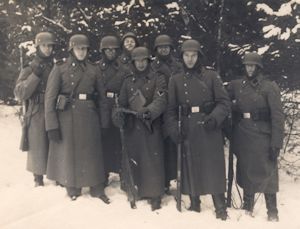
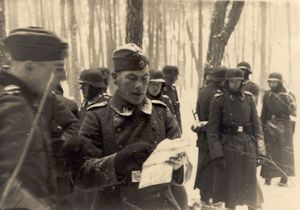
Military training was what it was all about, and the young Danish men soon learned military discipline and endurance. During the breaks, however, there was always room for a little Danish camaraderie, while the officers (including Ejgil Poulsen) planned the next advances.
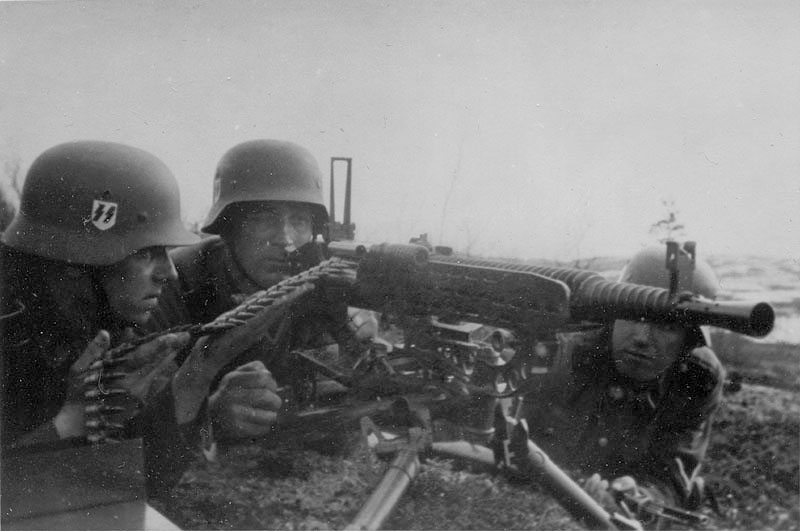
An SMG group sets up, gets ready, then takes off again and moves 10 meters to set up the rifle again – and that’s how the day goes.
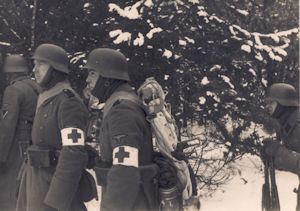
The medical service was and remained a serious matter for many. By the standards of the time, they were extremely well trained and equipped, which would save the lives of many Danes.
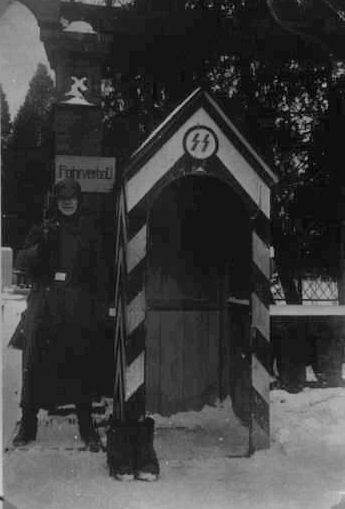
A shed at the main entrance to the camp. A cozy place, just not in winter when it was 30 degrees Celsius.
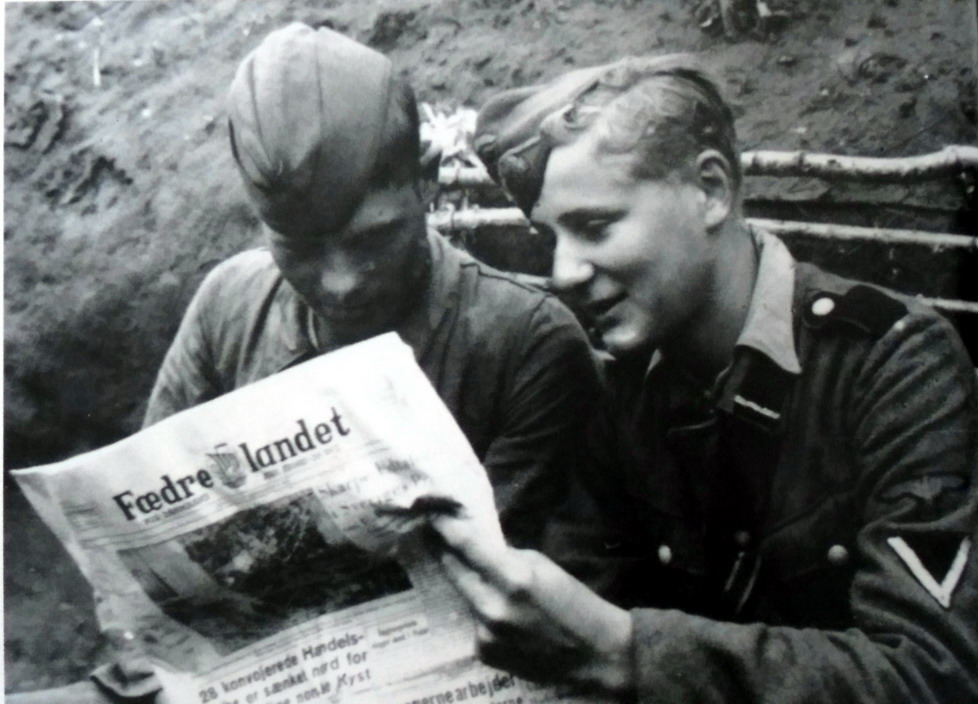
Even though there wasn’t much free time, there was still time for cozy living and there was always great joy when there was news from home. New newspapers have just arrived here from the publishing house Fædrelandet.
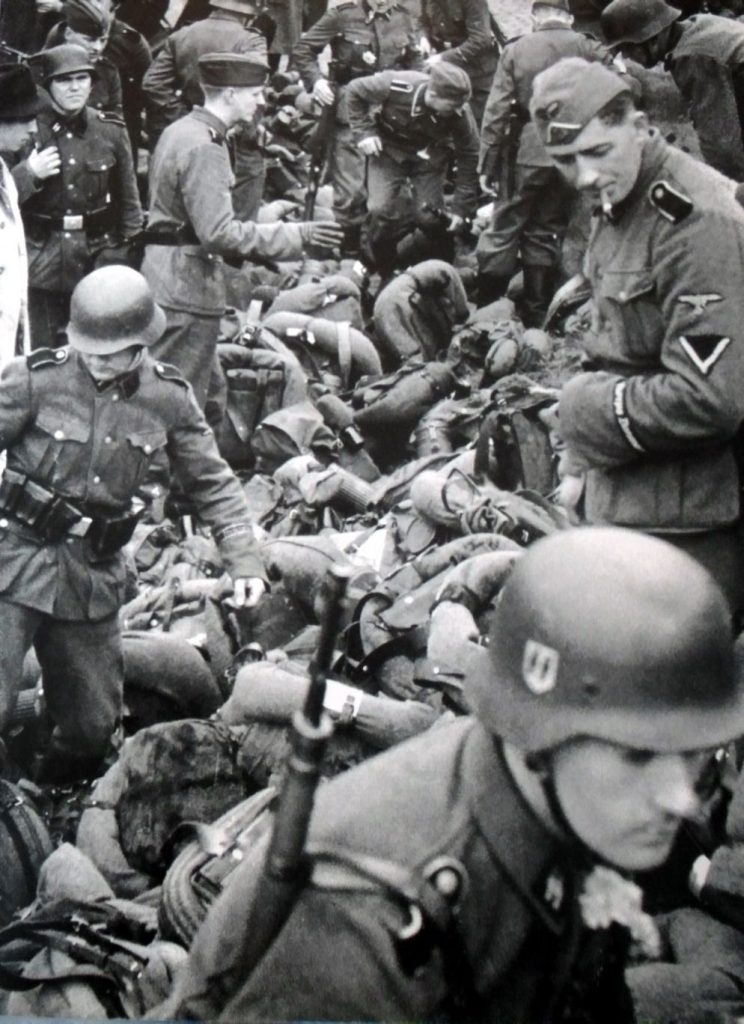
Finally, on the early morning of May 7, 1942, the crew can pack and load aboard a freight train to finally get to the front. The train rolls over Rogassen to Lithuania and on to the DNO airfield. Here, the crew is reloaded into Junker aircraft and transported to Demjansk to be deployed to the front line.