
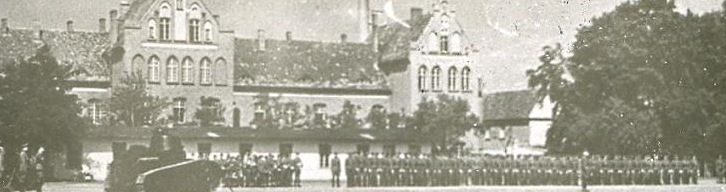
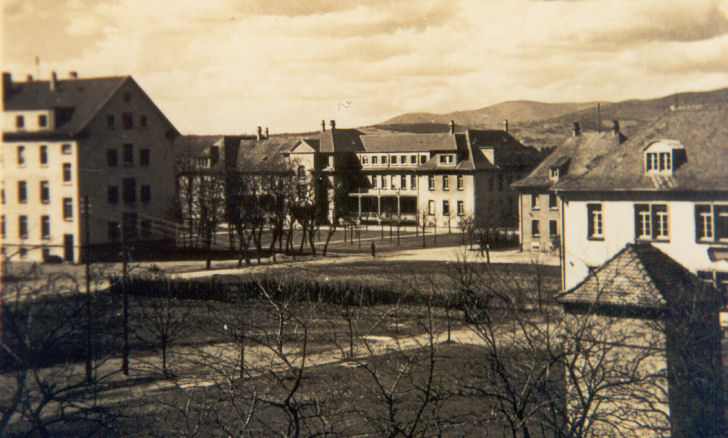
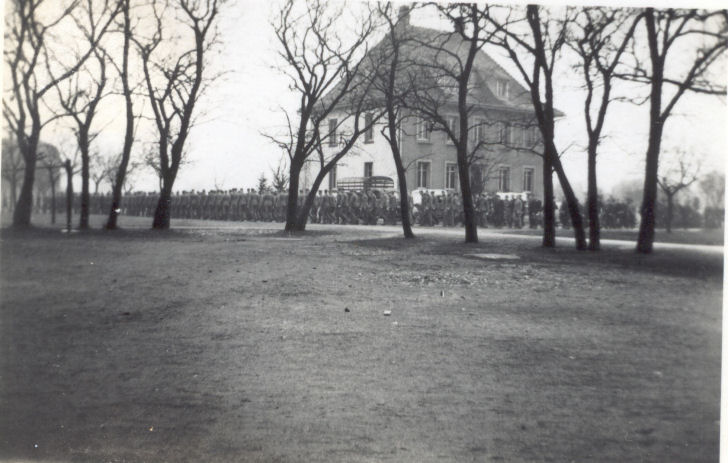
The Danish volunteers were stationed at the following training camps:
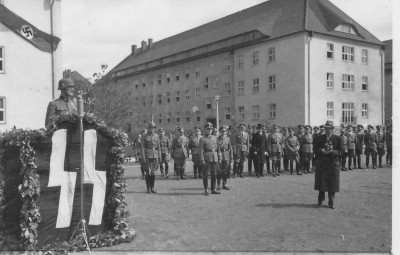
Sennheim, France: Here, from April 1940, a six-week voluntary political and sports school training took place. Several groups of Danes participated, who were subsequently attempted to be recruited into service in the Waffen-SS. The town, located in the Alsace region, is today called Cernay (near Thann).
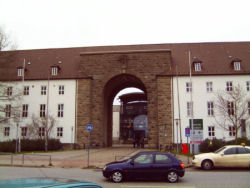
Hamburg-Langenhorn, Germany – Langenhorn barracks: The SS-Verfügungstruppe’s newly formed Verfügungstruppe division (1 April 1940), together with the staff and I Battalion of SS-Standarte “Germania,” was established and trained in the newly built barracks “Hamburg-Langenhorn,” known as the “Germania barracks.” At that time it lay a few kilometres outside Hamburg; today it is located in the northern district near the airport. After “Germania” was sent to the front, SS-Standarte “Nordwest” was stationed at the barracks, and here the first Danish volunteers (60 men) arrived on 16 May 1941, being assigned to the 7th Company. Shortly afterwards, additional Danes arrived. On 19 July 1941, the first contingent of Danish volunteers of “Frikorps Danmark” arrived, and the Danes from Standarte Nordwest were transferred into the Frikorps. The barracks had no proper training grounds, so instruction was primarily theoretical. On 15 September 1941, “Frikorps Danmark” departed for full field training at the Treskau area near Posen in Poland.
*6. SS Volunteer Standarte “Nordwest” existed only for a few months and never saw frontline combat. The regiment was established by “Führer order” dated 3 April 1941 and formed on 10 April 1941. Originally, it was intended to be a political guard regiment to be deployed in Northwestern Europe, consisting mainly of volunteers from Flanders and the Netherlands with a National Socialist background, but due to a lack of manpower, volunteers from Denmark were also included. The regimental commander was SS-Standartenführer Otto Reich, who later gave his name to the group under which the Frikorps was deployed in combat.
When the war against Russia began, approximately 390 Flemish volunteers were ordered on 10 July 1941 to continue training in a nationally separate unit, and the same applied to the Dutch volunteers. O. Reich was transferred as commander of the Volunteer Battalion “Niederlande.”
The 109 Danes (both North Schleswigers and Danish nationals, as well as training personnel) awaited the formation and preparation of the new independent Danish battalion “Frikorps Danmark.” Barracks 2009.
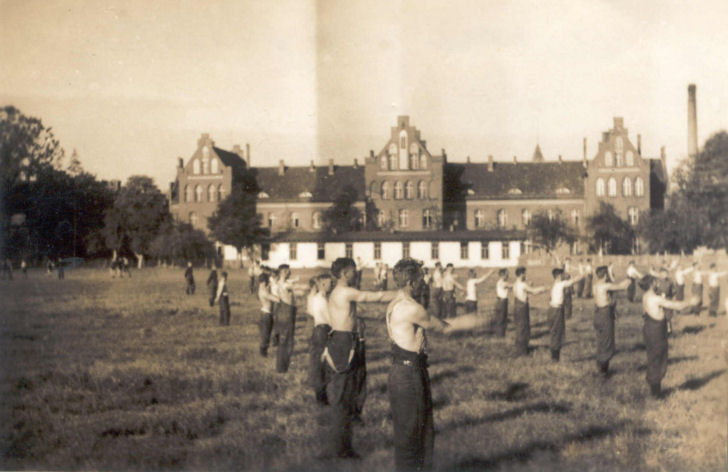
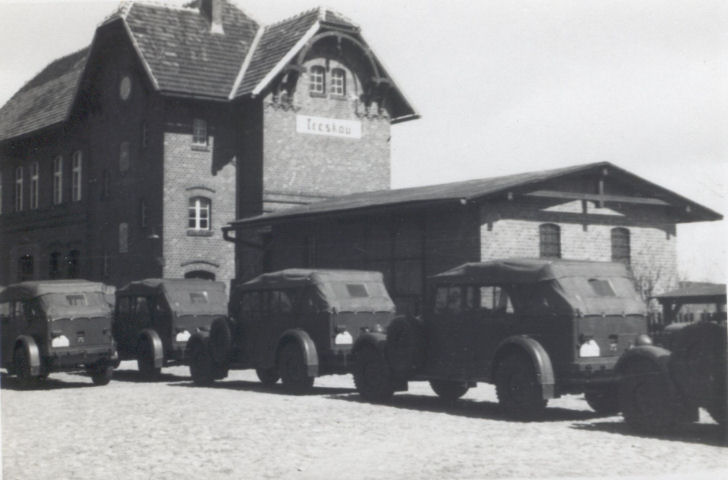
Treskau, Poland – Treskau barracks: Located 20 km north of Posen in the western part of Poland. From the 19th century, the town bore the name Owinsk. A population census from 1 December 1885 records 670 inhabitants in the town of Owinsk and 612 in the surrounding area, with a mix of Protestant, Catholic, and Jewish populations. Around 1910, forestry in the region expanded significantly. Until 1919, Owinsk was part of German territory, but from 1919 to 1939 it became part of the independent Polish state. Information from 1921 shows a population consisting of Poles, Germans, and others.
Outside the town of Owinsk, a military training area known as “Warthe-Lager” was established; both the town and the training area are crossed by the Warta River. After the Polish campaign on 26 October 1939 (and until 23 January 1945), the town again received a German name—Treskau (named after a local landowner). The name was later changed back to Owinsk when independence was restored.
In Owinsk there is a monastery founded around the year 1250. During the 1880s it was expanded into a complex of 15 buildings and functioned as a Catholic monastery and later as an institution for the mentally ill and disabled.
With the formation of SS-Totenkopf recruit Standarte under SS-Oberführer Julian Scherner, Treskau was once again (as during WWI) converted into a German military training camp on 27 October 1939, and the buildings of the “old monastery” were evacuated. From 16 September 1941, the independent Danish horse-drawn battalion “Frikorps Danmark” was stationed here. Departure for frontline deployment took place on 7 May 1942. From 1 October 1942, the camp was converted into an NCO school; part of it was transferred on 15 October 1943 to Radolfzell, but the site continued to operate as an NCO school until spring 1944. A portion of the partly bombed officer school “SS-Junkerschule Braunschweig” was moved to Treskau in early summer 1944, and the camp functioned as an NCO and officer school until 23 January 1945, when Soviet forces took the area (see the book “Die letzten Junker aus Treskau” by Rudolf Kuntzsch).
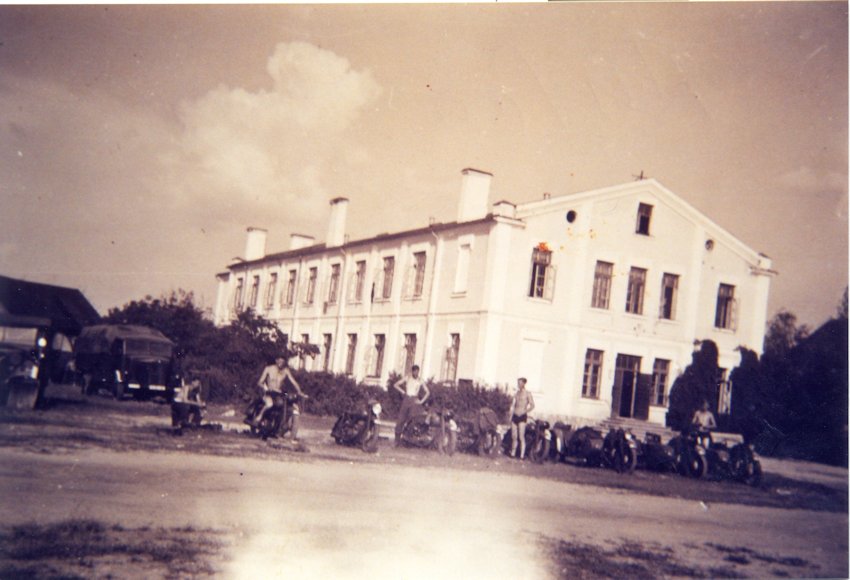
Mitau, Latvia – “Hindenburg” barracks (30 km south-west of Riga) are today used by the Latvian Home Guard and partly as a police facility. The city has been called Jelgava since 1945, and the four main buildings and the central training ground still exist.
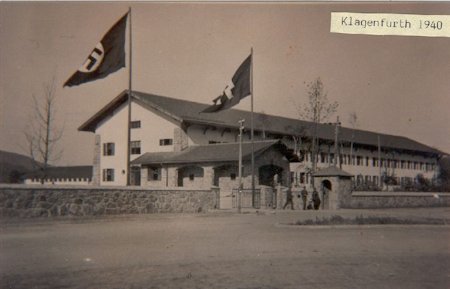
Gratz-Wetzelsdorf, Austria Named: Belgian Barracks, built in 1939 and became the main barracks for Regiment “Der Führer”. “DF” was still the registration code when the first Danes arrived, and they were therefore given W-SS no. registered under “DF” and wore a dead man’s badge with the inscription “Der Führer”.
In 1942, the Ersatz companies were gathered here under the name: “Ers. Batl. der Legionen”, consisting of an Ersatz Komp. for Danes, one for Flemish, one for Dutch, one for Norwegians and one for Finns. The “Finnische Freiwilligen Bataillon der Waffen-SS”, is a Waffen-SS association and should not be considered as belonging to the legion.
In 1945, the British took over the barracks and only handed it over to the Austrian Bundesheer in 1955
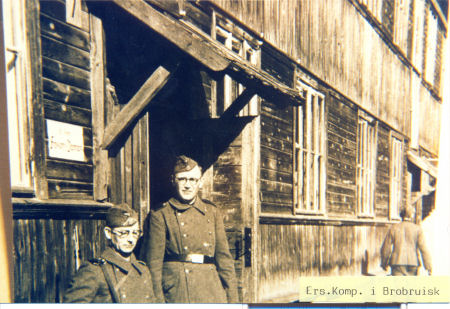
Bobruisk, Russia Today Babruysk, 150 km southeast of Minsk in Belarus. Training site for convalescents (recreational personnel) and recruits from November 1942. From mid-December 1942 probably only a camp for recruit training.
Breslau, Poland Today Wroclaw, 250 km southwest of Warsaw in Poland. According to the daily order from the SS-Führungshauptamt, Berlin, dated 4.12.43, the camp was established as a training center for the Freikorps convalescent center by the Genesendekompagni (recreational personnel), and is subordinate to the military city commandant.
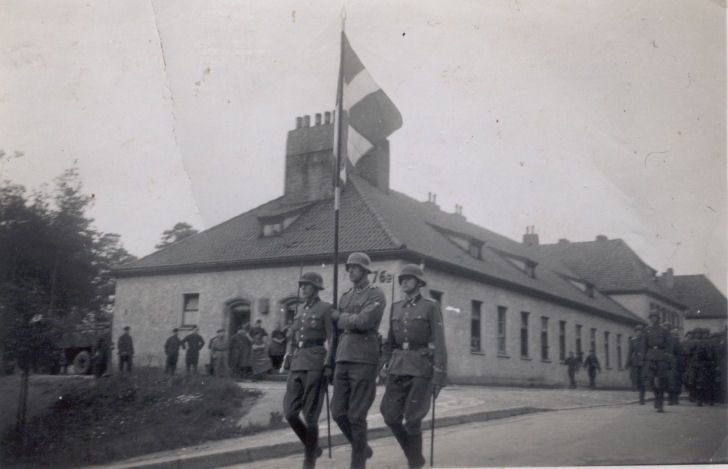
Grafenwöhr, Southern Germany One of Germany’s oldest and largest military barracks. In 1943, it was large enough to house an entire division with associated training and recruitment units. After the war, it was taken over by American forces and is today the largest American military base in Europe.
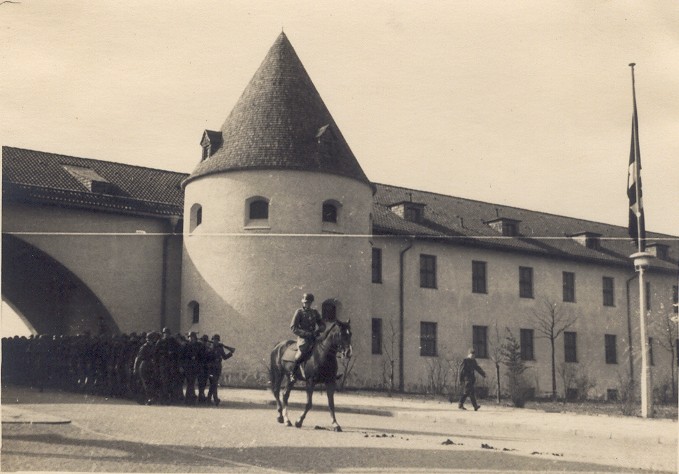
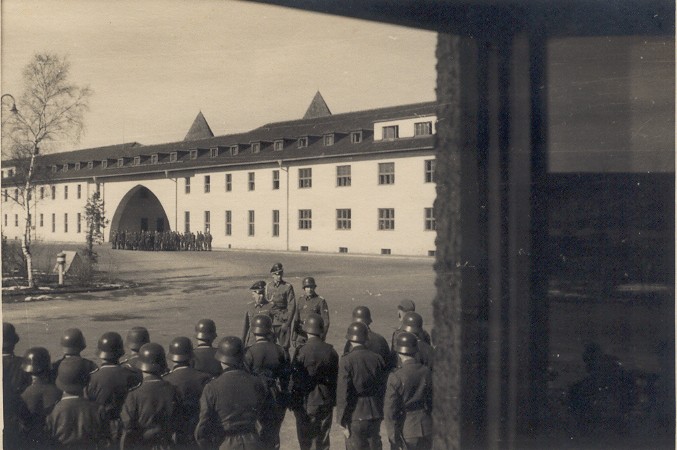
Bad Tölz, Southern Germany Newly built, 1943, officers’ barracks where officers from the volunteer nations that were part of the armed SS were trained, e.g. from Denmark, Norway, Sweden, Finland and the Netherlands. On 9-10 October 1976, the first international European Junker Meeting (international Officer Meeting) was held here.