
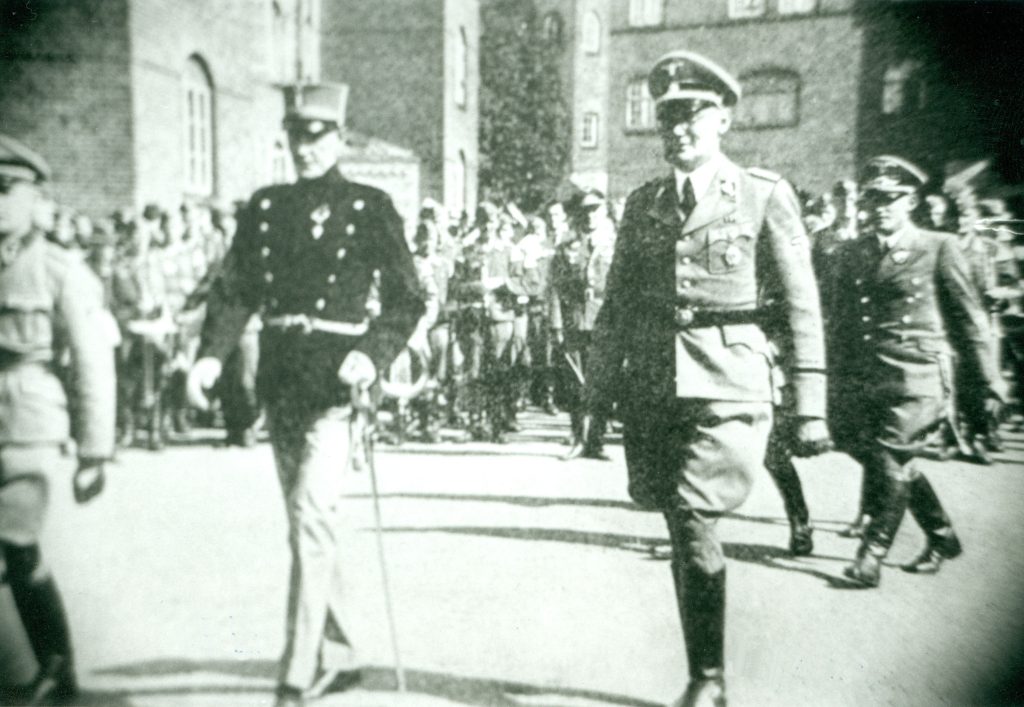
A few days earlier, the following article could be read in the newspaper Fædrelandet:
“Kaptajn E. N. Møller carries out the duties of Commander C. P. Kryssing in Denmark.
When Commander C. P. Kryssing one day leaves Denmark together with Frikorps ‘Danmarak’, the head of the recruitment office at Rosenvængets Allé no. 32, Captain E. N. Møller, will assume the commander’s duties here in Denmark. Captain E. N. Møller stated on this occasion, in response to an inquiry from Fædrelandet:
When I joined Frikorps Danmark, there was only one motive—it is difficult to stay at home when the others are going into action. Due to my age, I am 51 years old, I had already been rejected by Regiment Nordland, where I applied as a volunteer, and now Frikorps Danmark has found a use for me, which I am pleased about, even though the work for the time being will take place here at home. Captain E. N. Møller is known as a skilled and well-liked officer. Commander C. P. Kryssing could hardly have placed the many entrusted domestic functions of Frikorps Danmark in better hands.”
Christian Peder Kryssing was the first commander of Frikorps Danmark, despite the fact that he was neither a member of the Danish Nazi party (DNSAP) nor a Nazi.
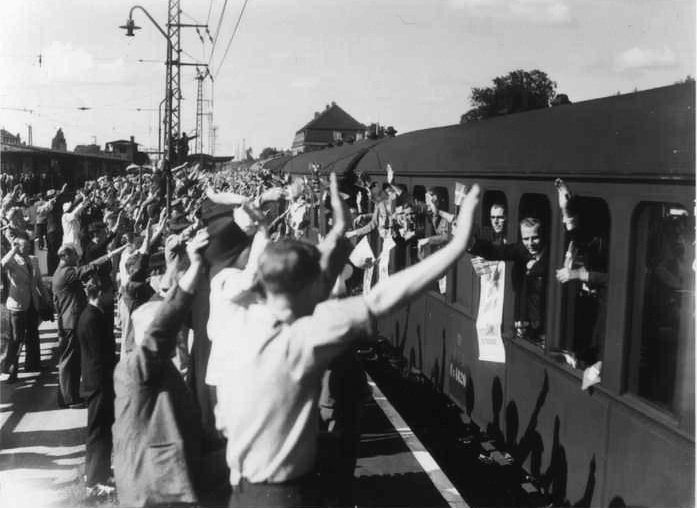
The photo shows the conditions under which the first group of Danish volunteers departed from Hellerup freight station on 19 July 1941. Disorder arose due to the large crowd, and it was realized that access cards had to be issued to relatives who were to be allowed onto the departure platform. This was arranged for the Frikorps’ leave in September 1942. The remaining spectators had to watch from the station building itself and the area behind it.
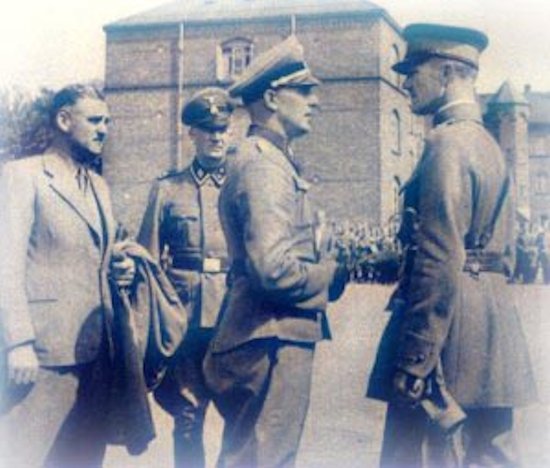
From left: a civilian from the party, Erling Hallas, von Schalburg, and C. P. Kryssing, at the departure of the so-called large contingent in 1941. Von Schalburg was recalled to Denmark from his service in Regiment Germania for propaganda reasons.
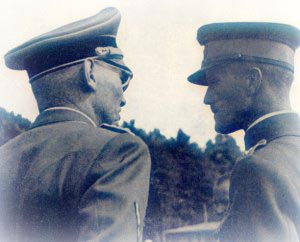
The Danish Lieutenant Colonel C. P. Kryssing (in Danish officer’s uniform on the right) in conversation with SS Police General and Brigadeführer Kanstein.