
As the conditions in July 1941 regarding the service terms of the independent Danish battalion within the Waffen-SS had not yet been finally approved by the SS Main Office (SS-Führungshauptamt) in Berlin, no production of unit insignia at the RZM or of the unit’s standard (military term for flag) had been initiated. The DNSAP therefore immediately launched a fundraising campaign to finance flags, and local DNSAP women’s groups took the initiative to produce Danish Dannebrog flags for use by the Danish corps.*
As NSUP is believed to have produced a Dannebrog with “Frikorps Danmark” sewn on in gold lettering, but definitive documentation is lacking. Of a more official nature, there are at least three flags, possibly one for each company.
1/ A battalion flag (white Maltese cross on a red square flag cloth, approx. 120 × 120 cm. Often mistaken in appearance for a Danish flag).
2/ A Dannebrog flag (approx. 130 × 95 cm), made of heavy fabric with text printed on both sides.
3/ A Dannebrog flag (approx. 130 × 95 cm) in thin fabric with text on one side only.
Flag (1) is believed to be the one produced by the company Weilbach in Copenhagen, with a significant sponsorship contribution donated by the firm Alf Berg. Flags 2 and 3 bear the text “Frikorps Danmark,” and the lettering was likely produced in gold print (known from DNSAP and NSU flags).
German flags were commonly carried with a flagpole topped by a swastika finial, whereas Danish flagpoles had no symbolic finial at the top.
This should not be confused with the so-called “Blood Flag,” which is a Danish NSU flag from the Frederiksberg NSU branch, and which was handed over to a group from the 3rd company, where von Schalburg had gathered most of the NSU members from his time as NSU leader. The flag’s inscription “Through Struggle to Victory” refers symbolically to remaining loyal until the blood is shed, hence the nickname “Blood Flag.”
Nor should it be confused with K.B. Martinsen’s “Blood Flag,” which is believed to have been brought to the front after a period of leave. It originates from his time in the Danish Scout Corps. It consists of a red cloth with a wolf’s head, fringes, and a flaming dragon’s mouth, a symbol associated with King Valdemar Atterdag’s bodyguards—the “knaberne” from Rinds herred—also known from the book “Drotten.”
The term “Frikorps flag” is therefore not unambiguous, as it refers to several different flags, and such a designation should be understood as the symbol of the unit’s identification.
The claim that a Frikorps flag, as mentioned in several books, was carried all the way to Berlin in 1945 is not supported by any documentation.
Barracks flag: In the barracks where Frikorps Danmark was trained, the German Reich flag and the Danish flag were flown side by side. This “barracks flag” was moved from Hamburg-Langenhorn to Treskau and, during operational service, was kept with the staff company.
Press release from DNSAP regarding flags and recruitment for Frikorps Danmark.
Dated: Copenhagen Ø. Date: 15 July 1941
Danish women have taken the initiative to organize a collection with the aim of providing a beautiful standard, which will be presented to Frikorps “DANMARK” before departure and is intended to mark the headquarters’ position in the field.
Other private donations of Danish flags were also made to Frikorpset, intended to fly over the training camps in Germany.
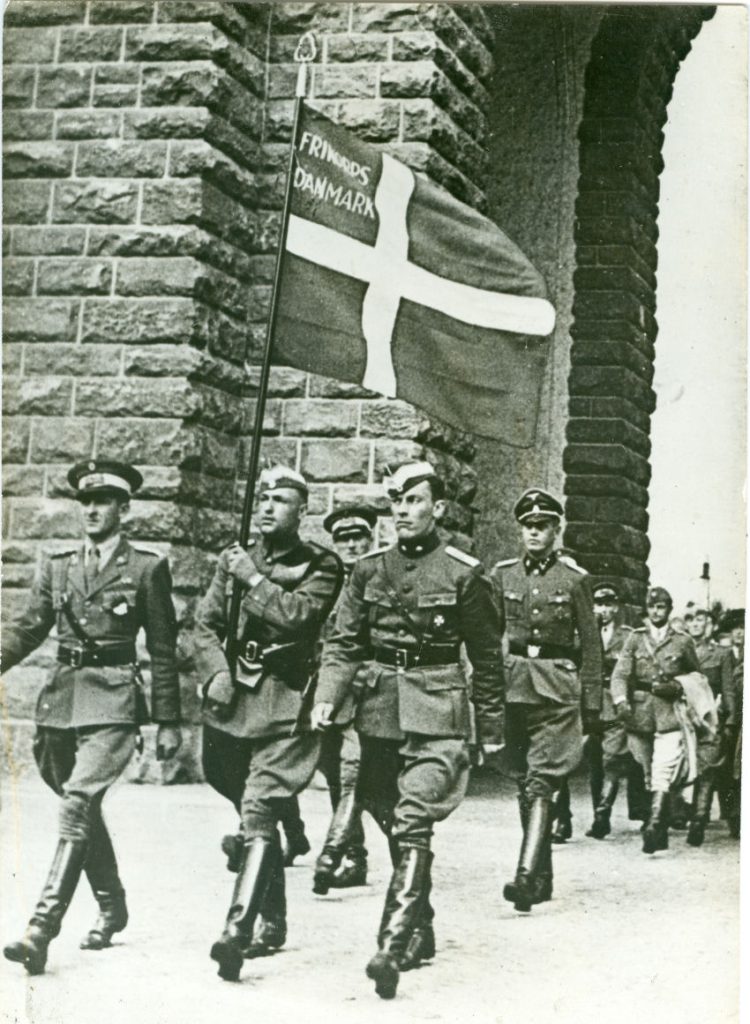
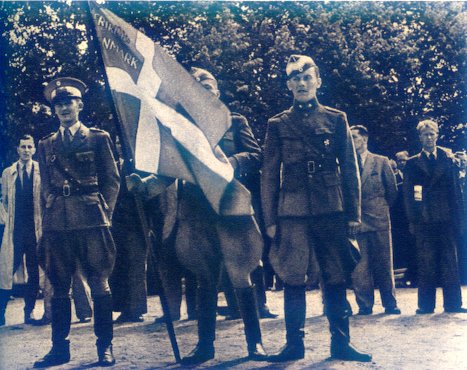
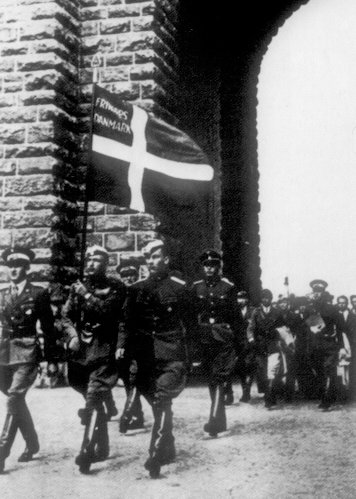
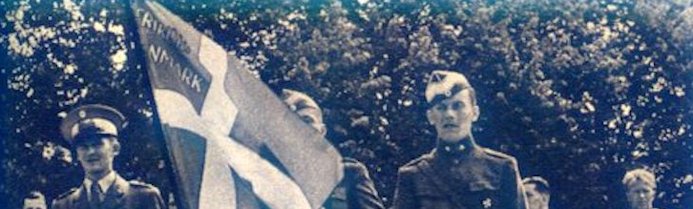
Frikorps Danmark upon departure from Copenhagen on 17 July 1941. Note that the Danish officers wore their Danish uniforms, even though they had been enlisted in the Waffen-SS.
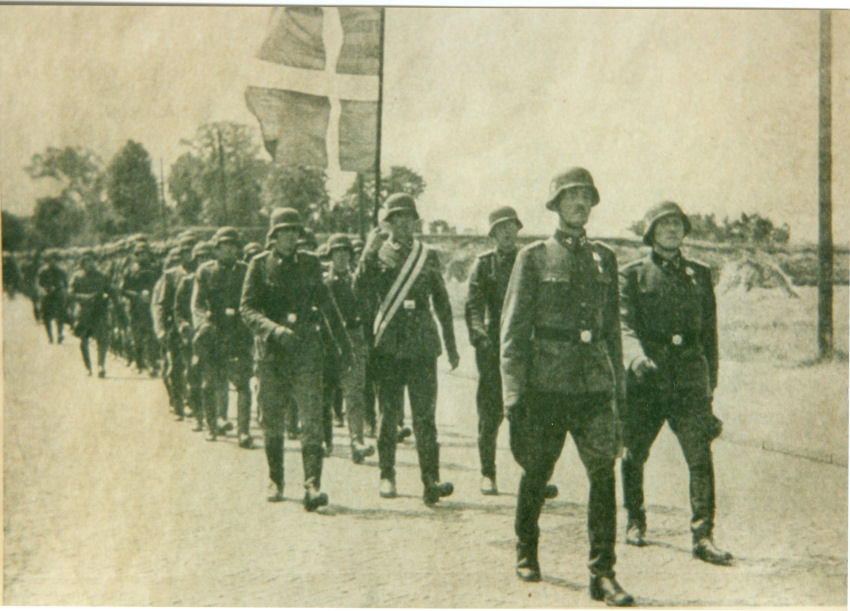
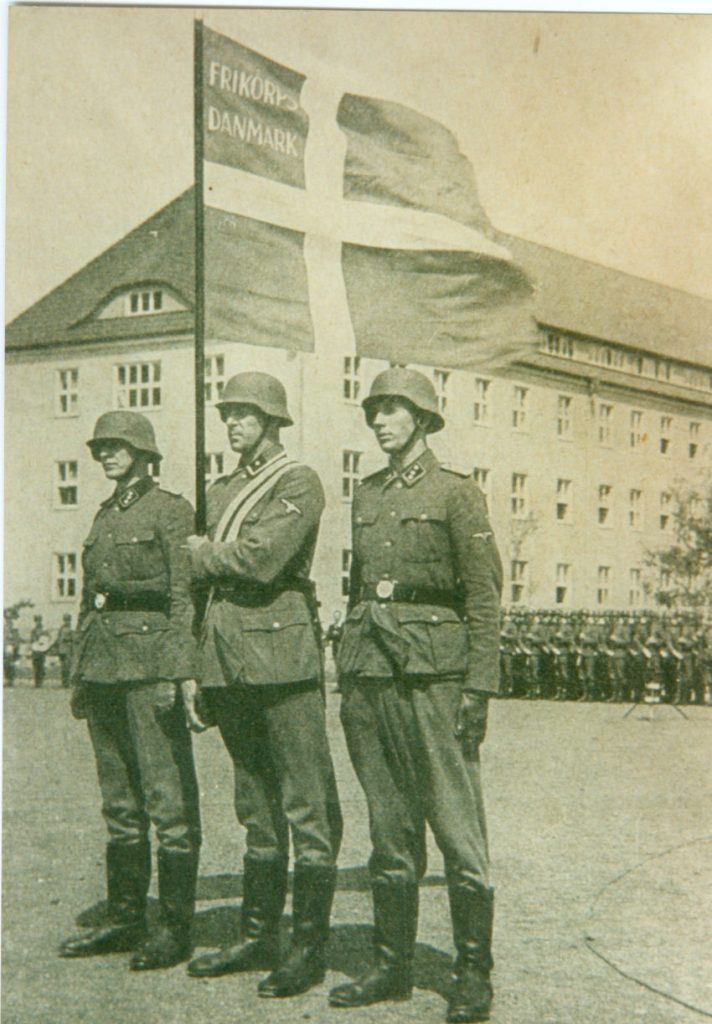
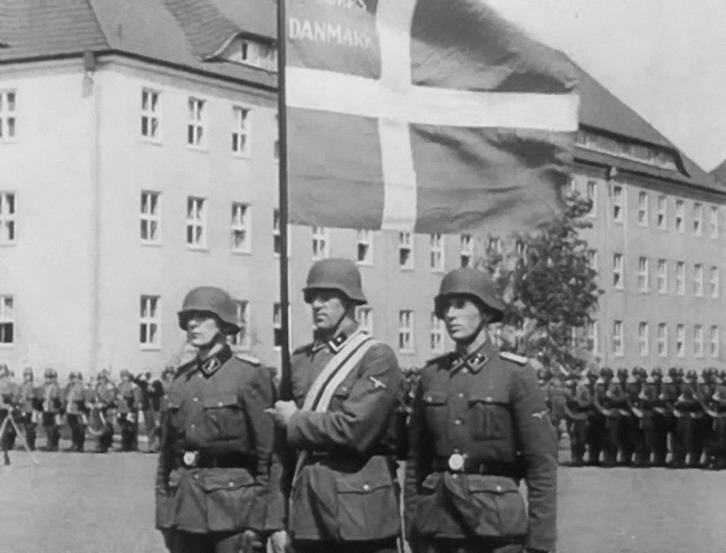
Photo from the Frikorps’ time in Hamburg-Langenhorn.
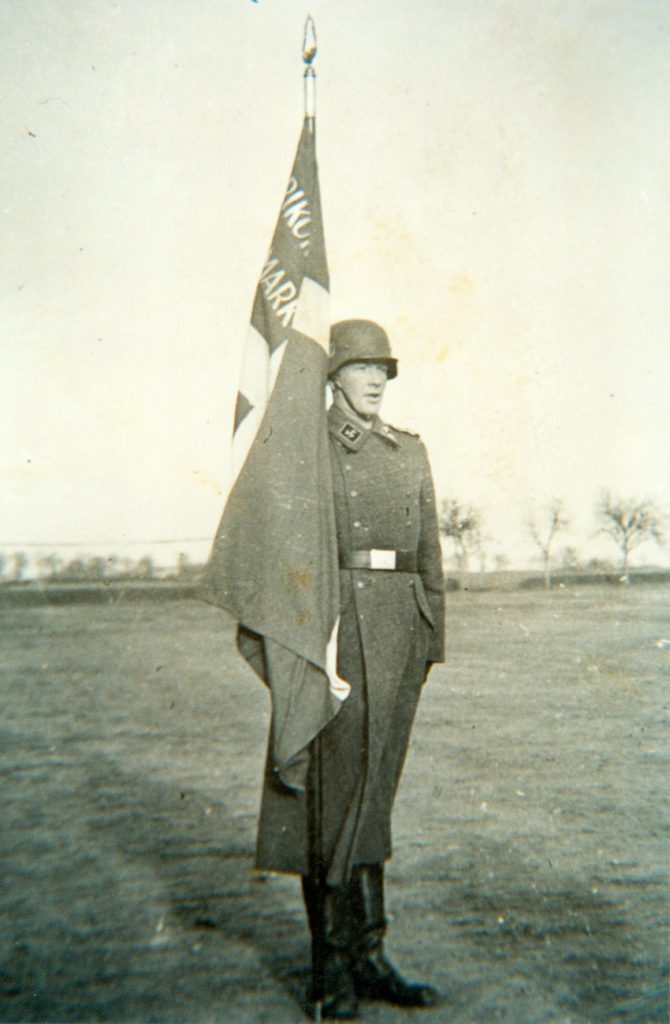
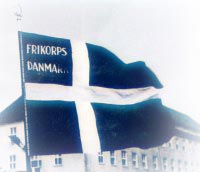
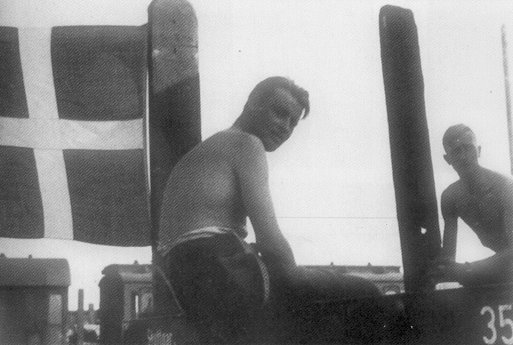
The flags accompanied the volunteers to the front. It is likely that some individuals privately brought a civilian Danish flag with them, and it is also known that the NSU Frederiksberg Storm brought its storm flag, known as the “Blood Flag.”
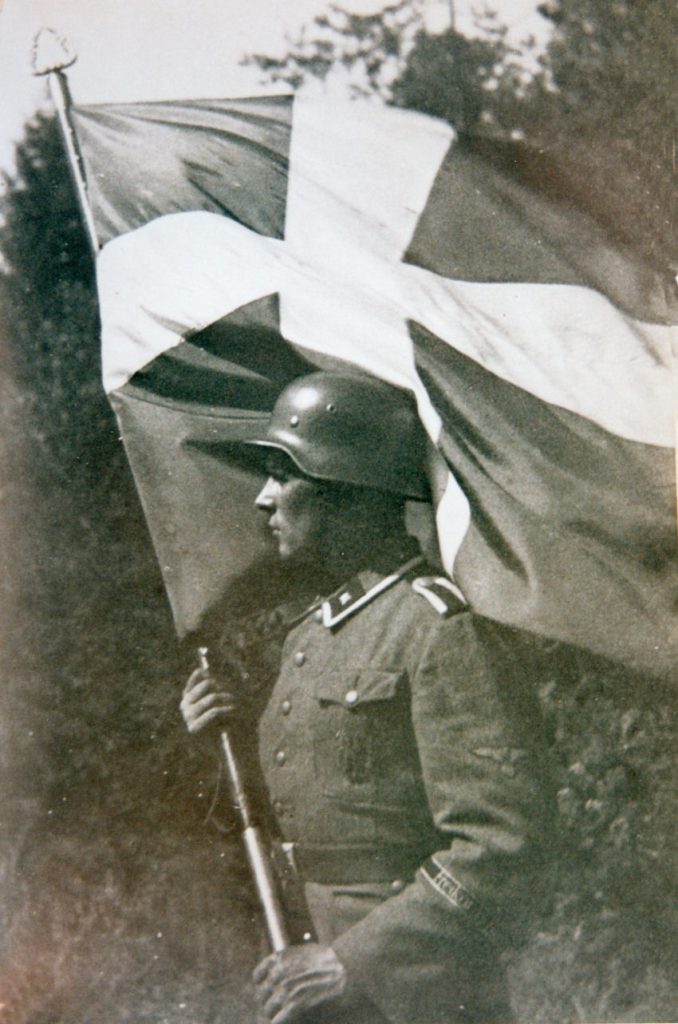
A propaganda postcard was produced by the DNSAP depicting an unknown Danish individual as a flag bearer. There are also a number of photographs from the Treskau period showing Danes being photographed with the flag; however, these were not official flag bearers, but private photographs intended for personal use and to express a sense of proud affiliation.
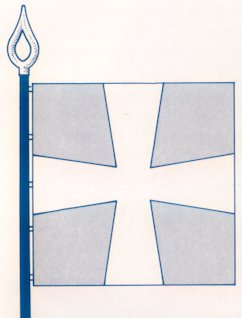
It should be noted that the flag you see the Frikorps flying when departing from Copenhagen is a battalion flag (square target with a white Maltese cross).
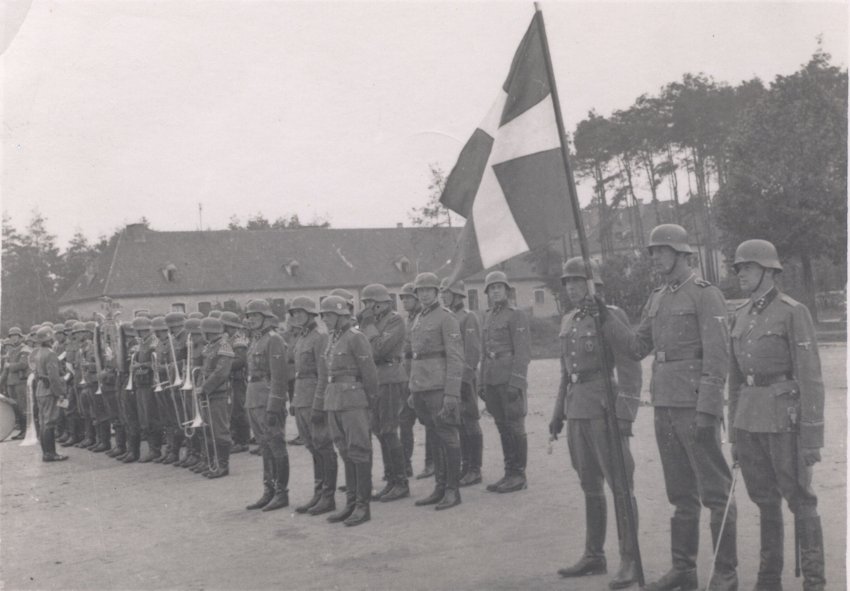
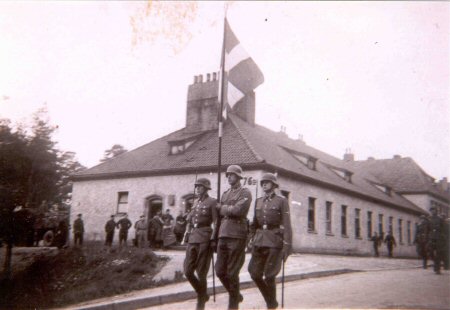
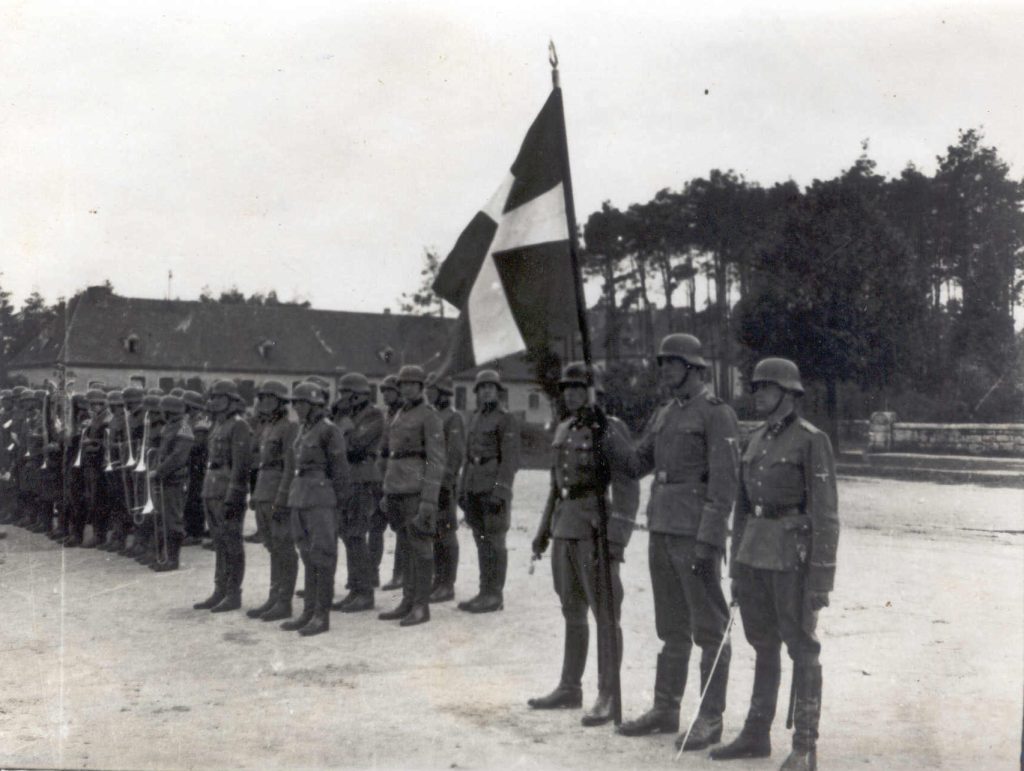
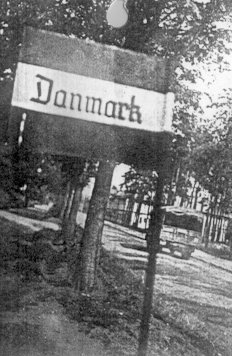
When the Frikorps Danmark was disbanded in April 1943 and the new regiment 24./Danmark was formed, the flag was kept (a battalion flag even though it was only a regiment). It was worn as the unit’s traditional flag, just as one could apply to continue wearing their Frikorps stripes.