
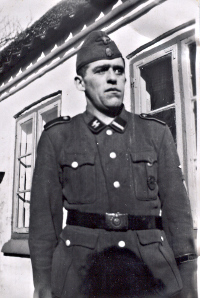

My Military Service and Discharge from Service
Towards the end of the summer, I received my call-up order and was to report to Bådsmandsstræde Barracks on January 3, 1929.
At the end of October, we held several farewell parties, as a number of people from the dairy and “Rosenbækgården” were changing positions, and the most “spirited” one was held at the dairy.
For the last two months, I worked at “Flinterupgård” in Ringsbjerg.
On January 3, 1929, I then put on “the uniform” and was assigned number 342.
The first two months were tough; one rushed about like a “tamed wild animal.” It was, after all, recruit training.
On March 4, I was transferred to the Hussar Barracks, where I became an orderly for the then First Lieutenant Lange, and there I had four people and two horses to look after.
In our free time, we got to know Copenhagen through various visits, including Tivoli, Bakken, Idrætsparken, and the Zoological Gardens.
On one of the last days, we visited the Tuborg Breweries and became thoroughly wet “on the inside,” and in the evening continued in Viborggade, visiting several taverns.
In July, I was unfortunate enough to fall off a horse and suffered a concussion, and I spent three weeks at the “Porridge Castle.”
On September 4, 1929, my period of service came to an end, and we gathered on the “Bossen” to hand in our equipment. When the command was given, “As civilians, fall out,” a group of happy young men left military life behind and set out into civilian life once again.
On November 1, 1929, I came to Vallø Dairy as a milkman and farmhand, and also helped a little in the dairy.
On January 20, 1930, I was to take a bicycle to the blacksmith from “Kammerherregården.” I got on it and rode over a stretch of uneven road, where I lost my balance and fell off, spraining one of my legs. It cost me three weeks on my back.
On September 1, 1930, due to certain “circumstances” that had arisen, I moved to Strøby, but returned to “Dyrehavegården,” Vallø, on November 1, 1930, where I once again had an educational position involving seed and potato cultivation as well as pig breeding.
As I was the foreman, I operated machinery and made most of the trips to Køge and other places with pigs, potatoes, carrots, cabbage, and more.
In the summer of 1931, my old grandmother died, the last of my grandparents, and was buried in S. churchyard.
In the autumn, we had two 36-inch threshing machines out working for the local people. When the day’s work was finished, we would often take a walk through the beautiful deer park and the gardens of Vallø Castle, over to Vallø Inn for a beer or an evening coffee, and then walk back through the quiet and idyllic forest, listening to the clock tower strike eleven—and sometimes twelve.