
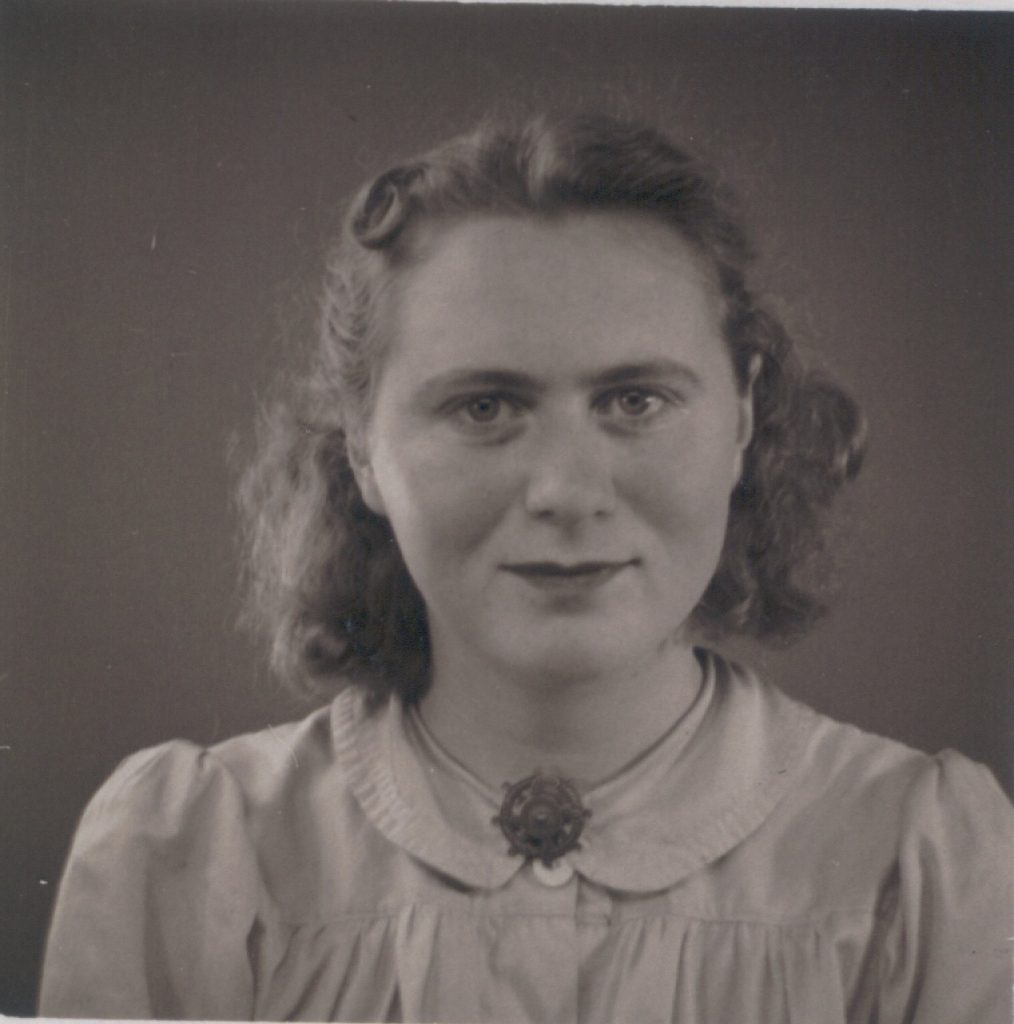
LAT/K1: Egelund, near Frederikssund, Tel. Femhøj 21.
The buildings included a 7-tønder-land orchard with fruit trees and vegetable-growing land. A gardener began renovating the camp together with three laborers from 25 September 1941.
This gardener, Eigil Einar Franck, went on to have a longer career as an employee of LAT, as he was hired at the camp and, in 1942, transferred to Ravnstrup Camp to help get it up and running. It is not believed that he was politically active or affiliated with the party.
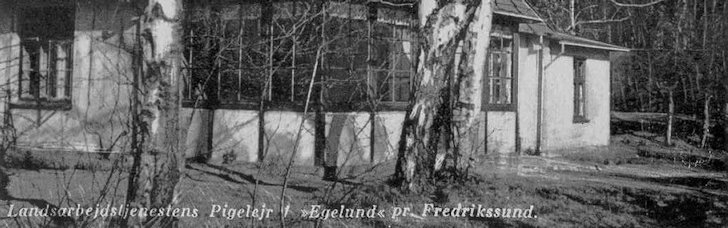
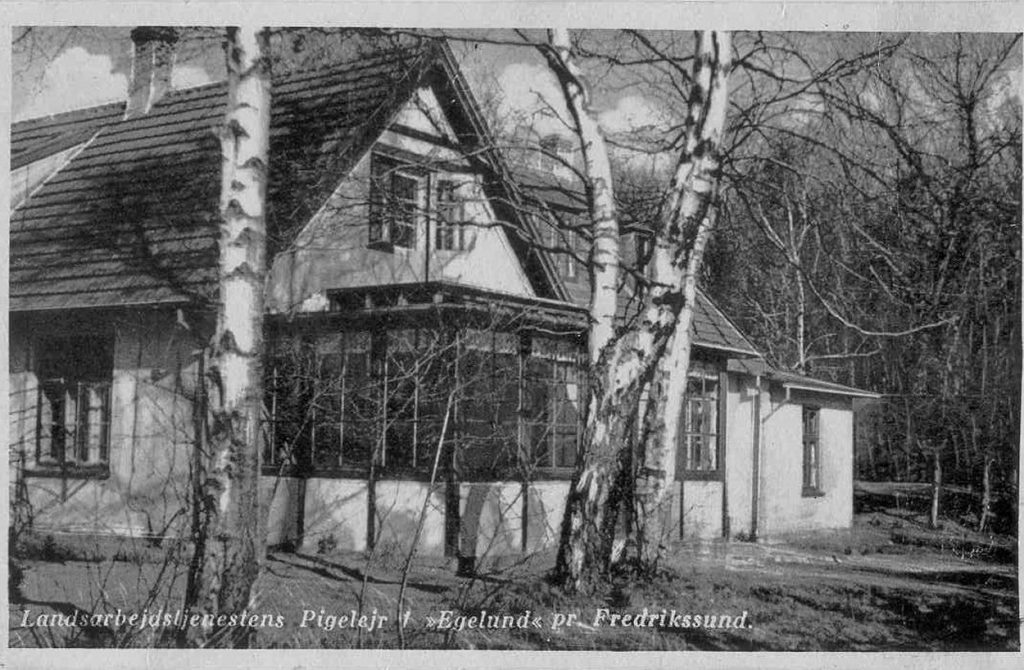
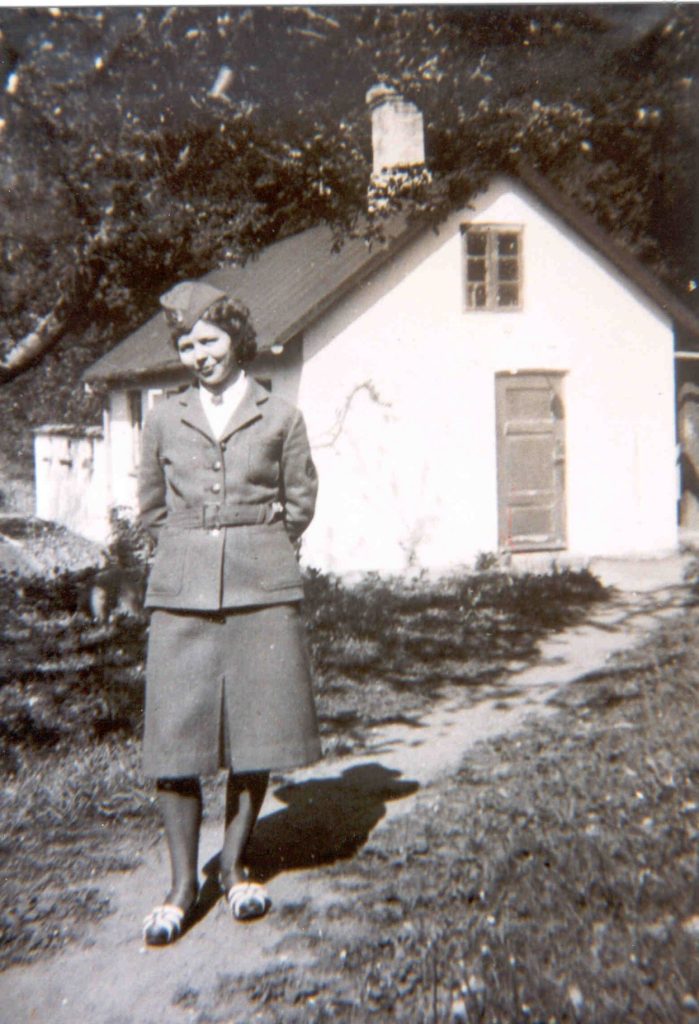
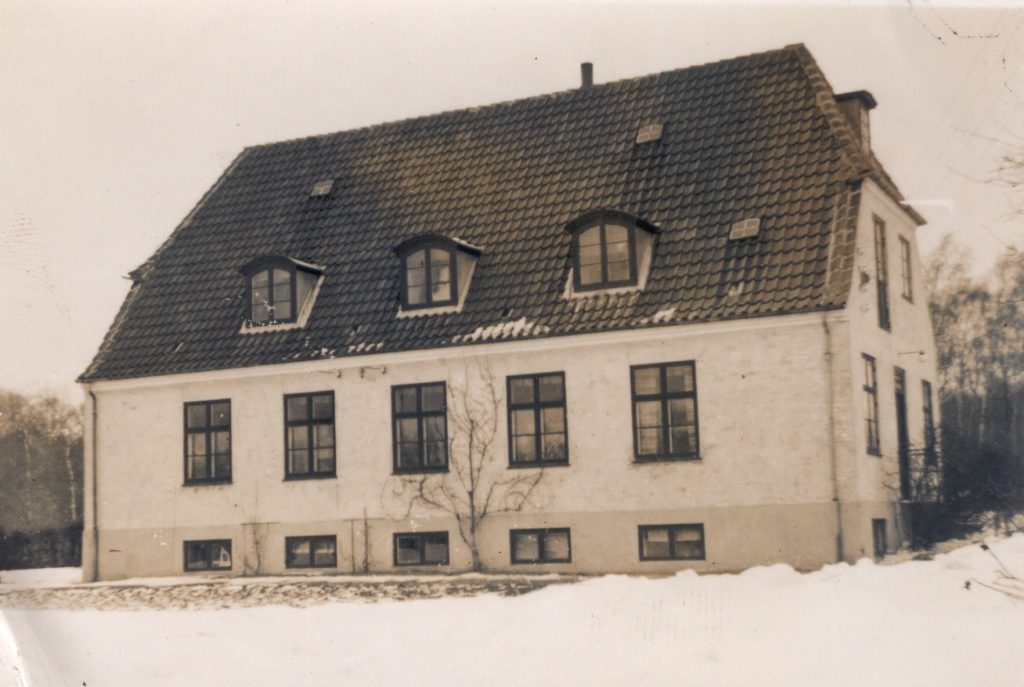
Egelund Camp became the first camp for girls within LAT and quickly established itself as the flagship of female training. From the outset, it had a capacity of 15 girls, with leaders accommodated throughout the camp, which consisted of a large two-storey gymnasium building, several smaller buildings housing 4–6 persons each, and the main building, which overlooked the water near Frederikssund.
The first group was called up from 15 November 1941 to 1 April 1942 and was, naturally, something of a pioneer group that was exposed to a variety of challenges. The camp commander was women’s leader Gerda Christiansen, who had been trained at RAD, Herwisdorf, Germany, in the early summer of 1941.
During the harsh winter of 1941–42, so much snow fell that all roads leading to the camp were blocked, and every available resource was deployed to make them passable. The girls did not want to stand aside and showed up with shovels, ready to help. The local laborers laughed a little and felt that “the little girls” would be better off going home.
A comment that only gave the girls extra determination, and they cleared snow like never before, with the result that they were thereafter respected by many. It is also said that throughout the winter they fetched water from a neighbor’s well and carried it to the camp in milk churns. The neighbor was a committed communist, but he did not hide his admiration for the girls because of their effort and enthusiasm.
Only to a limited extent were they sent out to work for local residents, as they had to concentrate on getting the camp functioning and on completing their training. It was envisaged that the girls from this group would later be used as comradeship leaders and leaders for future camps and groups.
A document indicates that 15 female workers remained in service until 28 October 1944, after which they were sent home. However, it has not been possible to further document how long the camp remained in operation or exactly when it was closed.
A deed dated 17 November 1943 shows that Stefan Vøldan sold the property to Miss Ellen Hørup, and sometime in 1944 Bodil Petersen took over the house to establish a camp for children with social and behavioral difficulties and challenging backgrounds.
Today, the buildings are owned by the King Frederik VII’s Foundation, and under the auspices of Copenhagen Municipality, a school and treatment home are operated there as a self-governing institution.
It is reported that in the garden of the house there was a private burial site, possibly with a small memorial plaque, where a local resident came on several occasions to lay flowers. The small flower bed was, of course, allowed to remain, but whether it was a person or a pet that had been laid to rest there remained a mystery.