
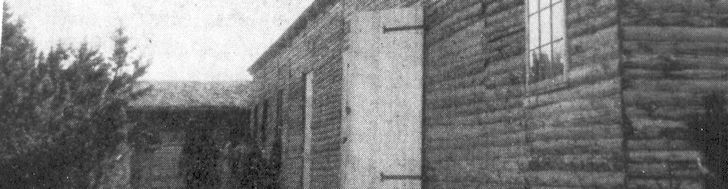
The plot of land is located at Kærgårdsvej 10C, west of the intersection between Kærgårdsvej and Femhøjvej, cadastral no. 43, Lillevordeby.
Within the National Socialist movement, names and symbols from Norse mythology and from historical events with the Nordic countries at the centre were widely used.
Although the term “Denmark” is first seen on the Jelling Stone, which King Gorm the Old erected for his wife Thyra in the year —-, maps of Denmark are not known until around 430 AD. The Jutland peninsula is on the map referred to as “Kimbrisi Chersonnesos?” – the Cimbric peninsula.
In another text, a journey is described, undertaken by the Romans, who sailed around “the Cimbric promontory” and into the Kattegat. “The Cimbric promontory” is, of course, the branch that formed a peninsula at Skagen.
The three Germanic tribes that, at the end of the first century, broke up and moved south were the Cimbri, who lived in East Jutland in what is now Himmerland, which was previously called Himbærsyssel (Himbær = Cimbri).
Some moved far south and spread fear and terror wherever they went. In the Roman Empire, people watched the development with anxiety and concern, and everything was put into stopping the people’s army around the Alps.
The first clash took place in the province of Noricum, present-day Styria, where the Romans suffered a major defeat at Noreia.
In Rome, fear grew; people spoke of “terror cimbricus” – the Cimbrian terror – and of “Teutonic fury.”
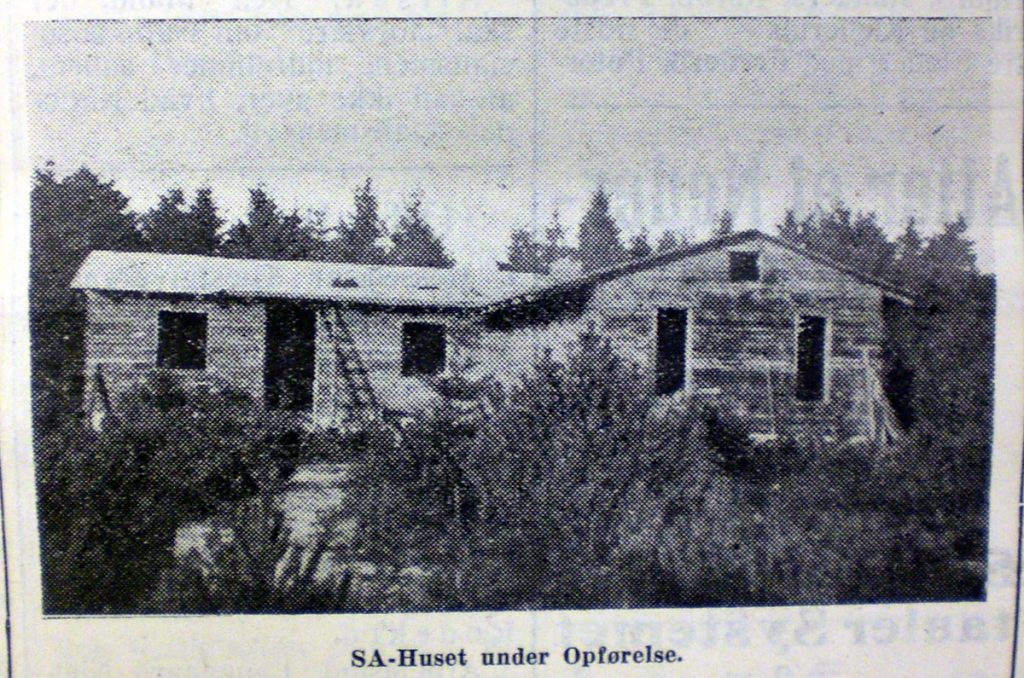
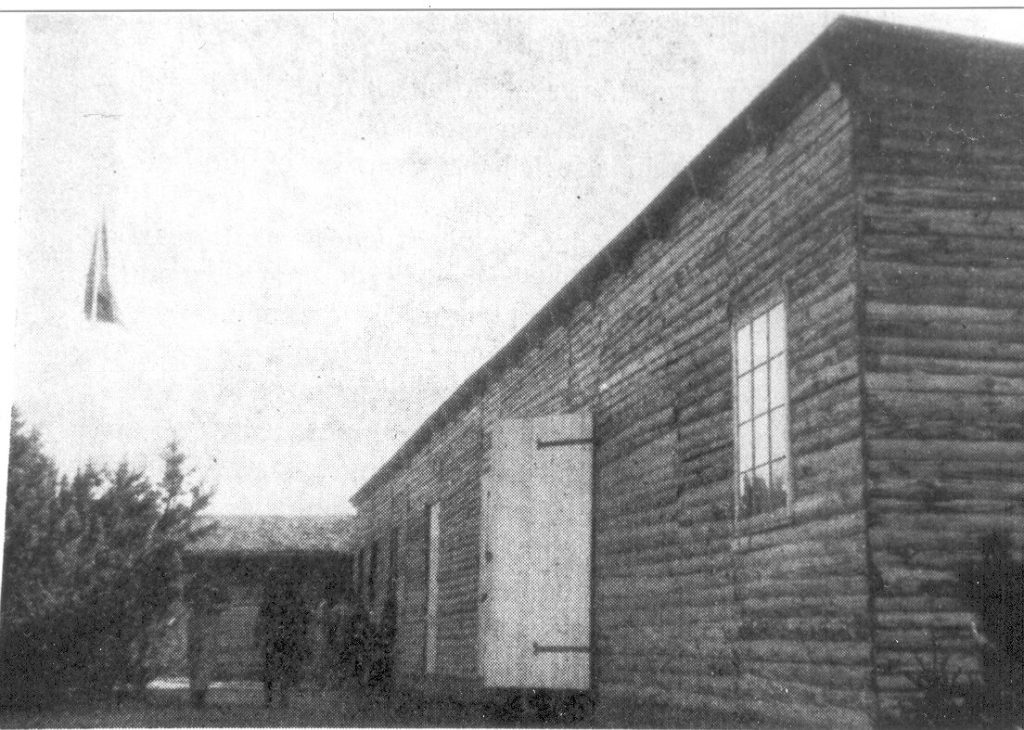
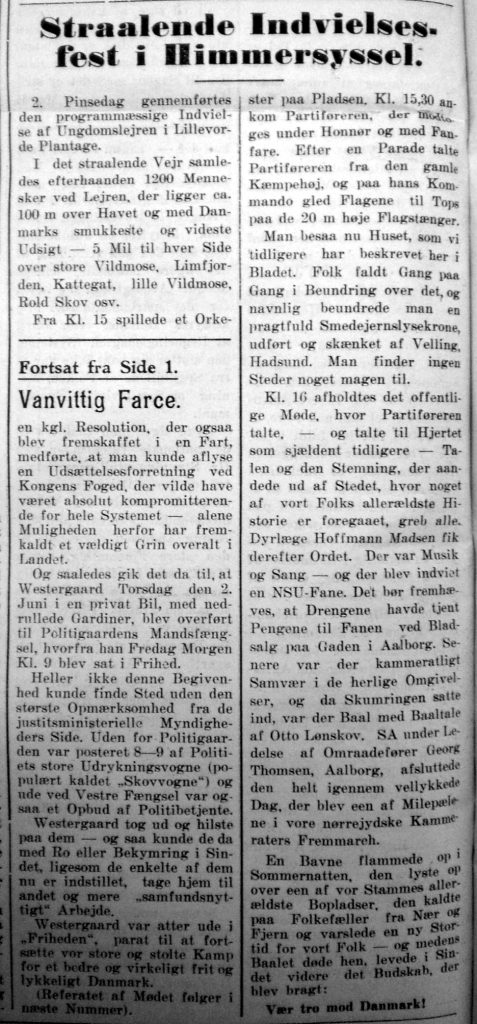
Local (Aalborg) party members believed that a camp house should be built, but it was decided that the entire “Syslet” should share it.
The local SA, PM, KM and NSU members met every Sunday in the period from August 1937 until Pentecost Sunday 1938 to jointly build a house.
The finances came partly from the party, local fundraising, and, among other sources, from the women’s group in Aalborg, where group leader Fr. Langgaard Nielsen had the women sew materials for a bazaar.
Until then, the camp had been used by, among others, the NSU for tent summer camps and SA events.
In connection with the party’s general expansion and plans to establish National Labour Service camps (late 1940), as well as the very strong local SA storm and party group, it was decided to convert it into a year-round camp for the new LAT.
Locals claim that it was built without obtaining a building permit on communal land. However, a newspaper article (Nat. Soc.) states that the land was acquired. This cannot be further documented.
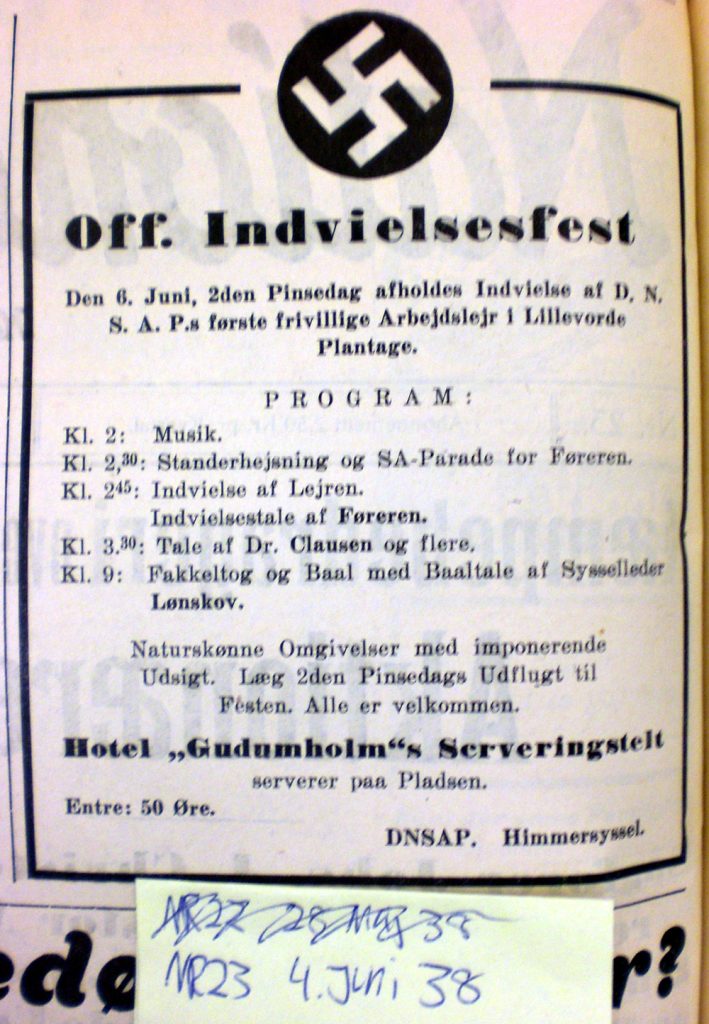
Under the motto “Service of Honour for the Nation”, DNSAP’s first labour camp was inaugurated on 1 June 1941.
A log cabin with a fieldstone foundation. Main entrance with a gate portal made of spruce poles from Kærgårdsvej, from the north.
Outside the area, a sports ground had been laid out as well as a small symbolic memorial grove with a sacrificial stone, again influenced by Norse Viking mythology.
A heavily uneven field course was laid out on the other side of the road (Femhøjvej), to the east.
Milk and eggs were purchased daily from the farm “Svendsgård”, west of the camp; other food items were partly purchased and partly donated by local party members.
However, there was such a large influx of course participants (partly in connection with the closure of the Rejsby camp in July 1943) that an extension was built (see drawing).
At the same time, work began on installing electrical wiring to bring in electricity, but this is believed never to have been completed.
In connection with the extension, a new flag area was also built (as far as I can conclude) on a small elevation, with a cast foundation and iron braces as reinforcement for the flagpole itself.
Previously, a stripped tree trunk of approx. 2.5 m (above ground) can be seen as the mounting.