
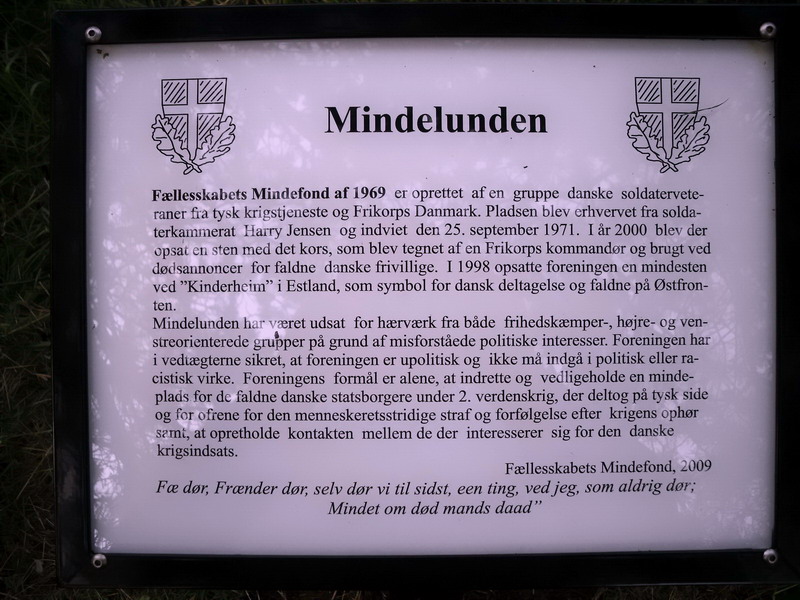
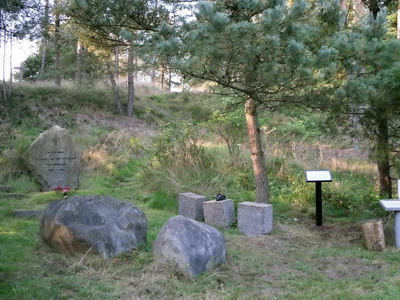
The association grounds at Kongensbro were for several years subjected to vandalism from both resistance members, neo-Nazis, and left-wing activists. Right-wing political groups attempted in the 1980s to take over the association but were rejected.
In recent years, the site has been calm, and a generational change has been carried out, meaning that the association will in the future serve as a military-historical gathering point for historical research and for the presentation of military history as documentation.
Immediately after the war, a veterans’ association was established in Denmark for Danish volunteers on the German side – the Front Fighters Association. This was later dissolved, and the veterans’ association “Sammenslutningen af 2 July 1978” was established, with its headquarters in Copenhagen.
As early as 1969, however, a group of former Frikorps veterans had drawn up plans for a memorial grove in Jutland. The soldier comrade Harry Jensen (building contractor) donated a small plot of land at Kongensbro for the purpose.
Excerpt from the association’s statutes regarding the purpose of the association:
“Its purpose is to establish and maintain a memorial site for fallen Danish citizens in German military service during the Second World War, as well as for the victims of the human-rights-violating torture and punishment after the end of the war.”
“To maintain and expand contact between all who sympathize with the Danish war effort on the German side, and to spread knowledge of it as widely as possible.”
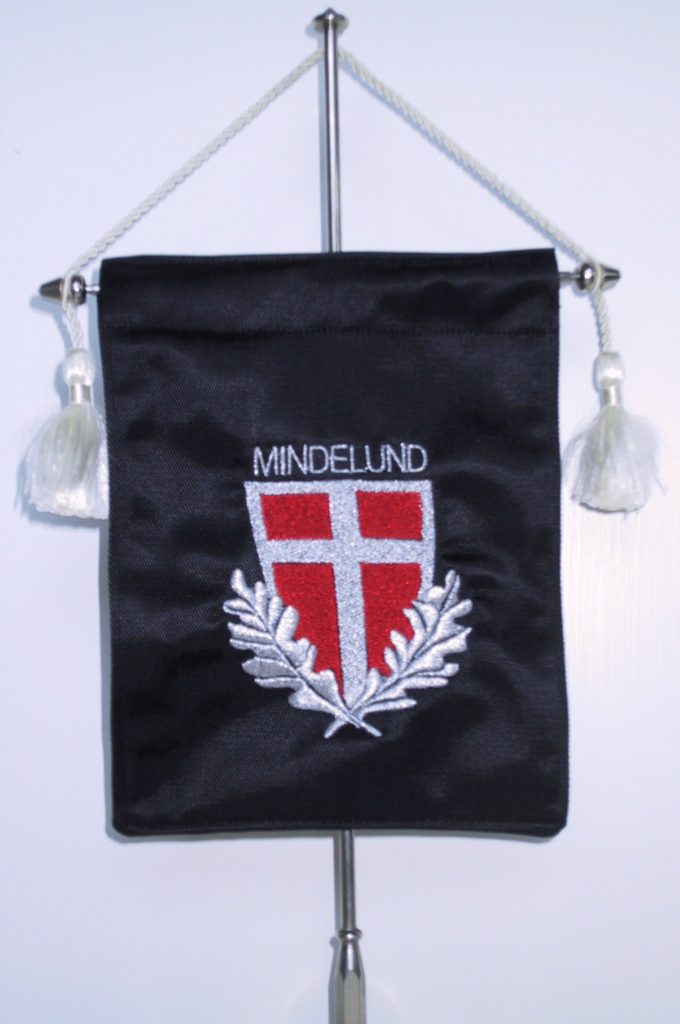
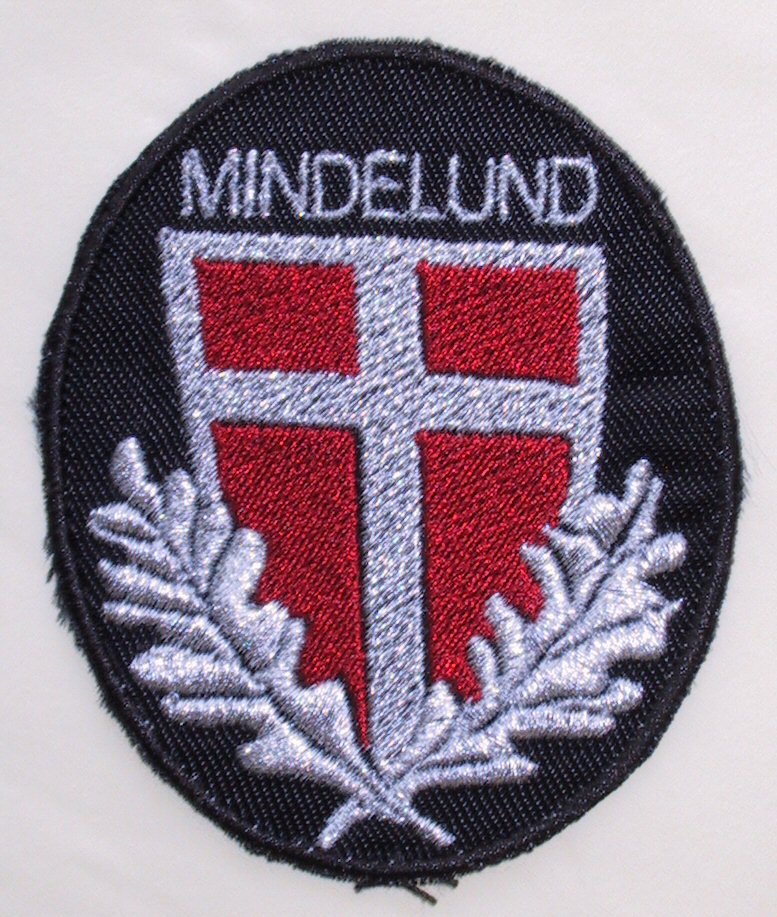
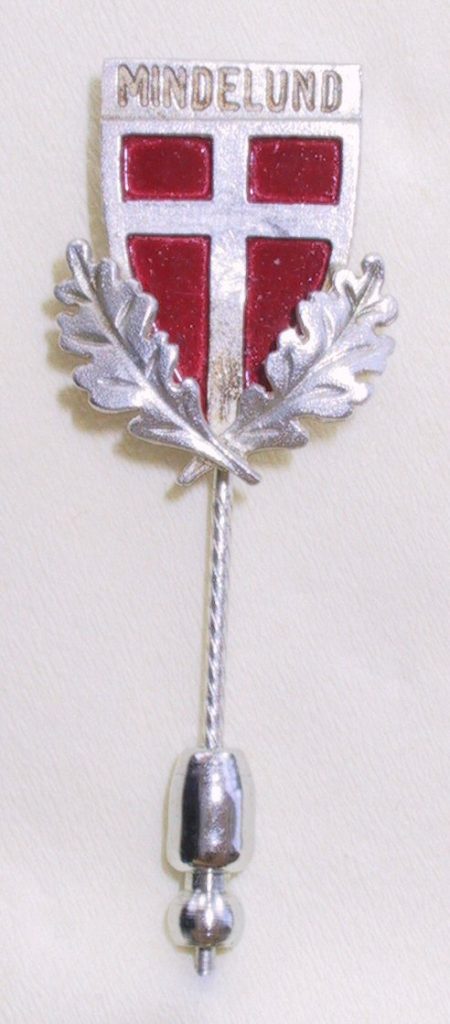
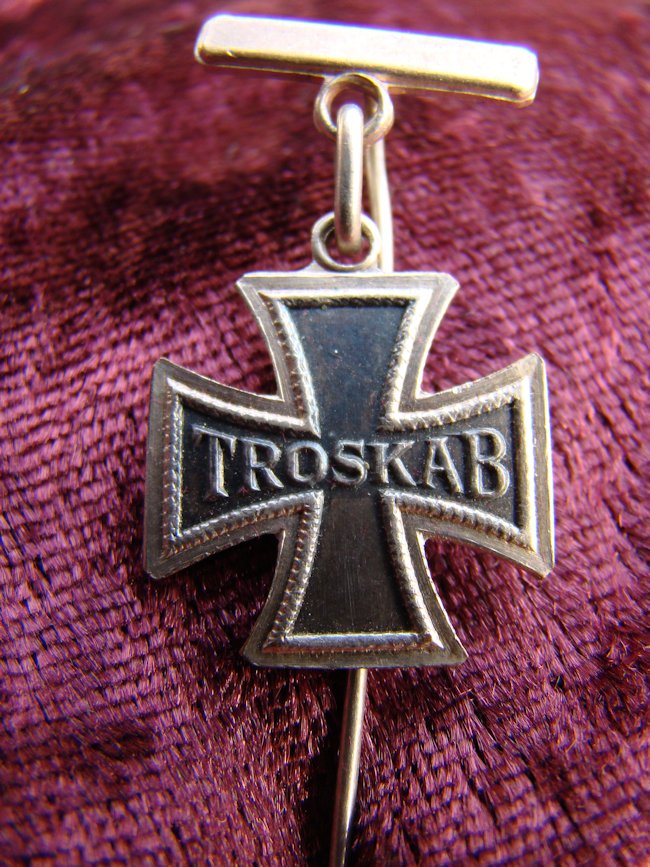
The association “Mindelunden” has its own table flag as well as an emblem for membership/supporters of the association. A sleeve patch was never introduced and should only be regarded as a curiosity.
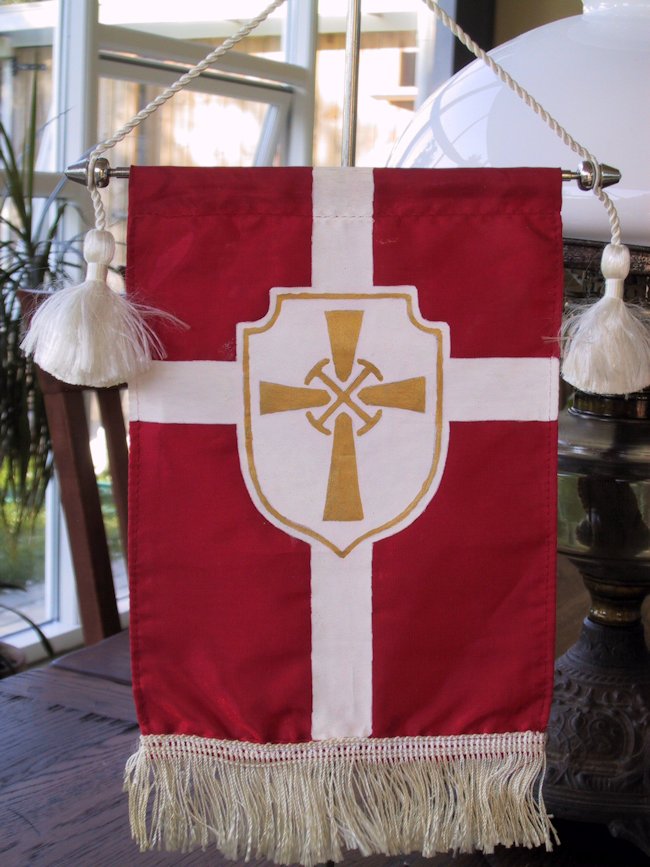
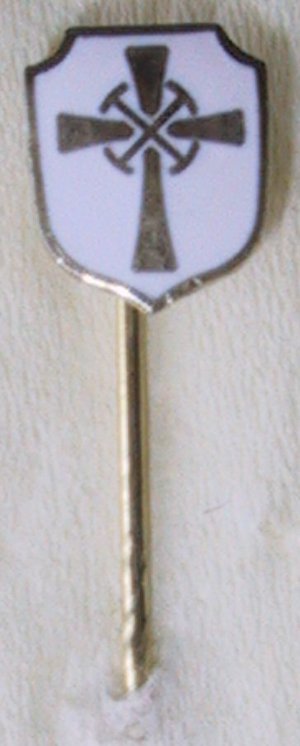
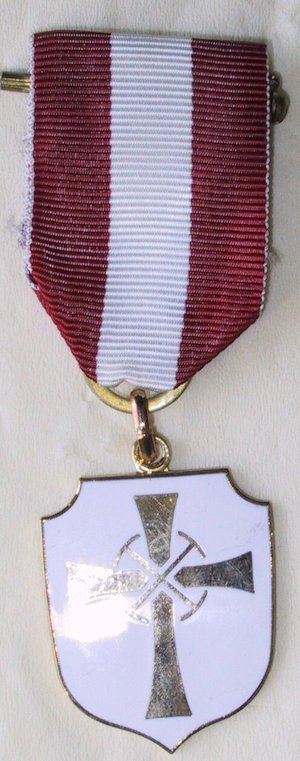
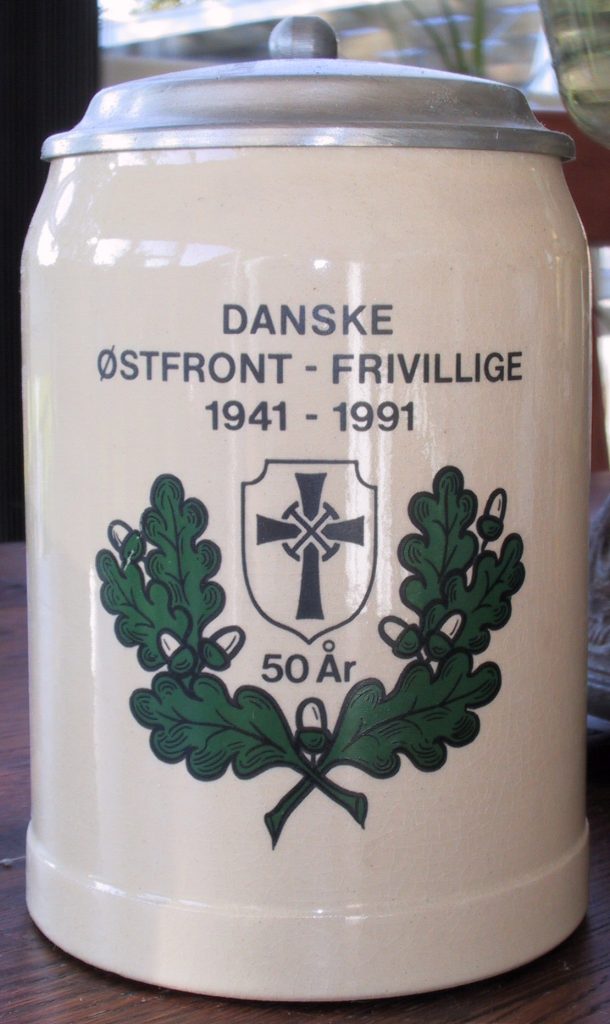
The 1969 association in Copenhagen likewise has its own banner and emblems.
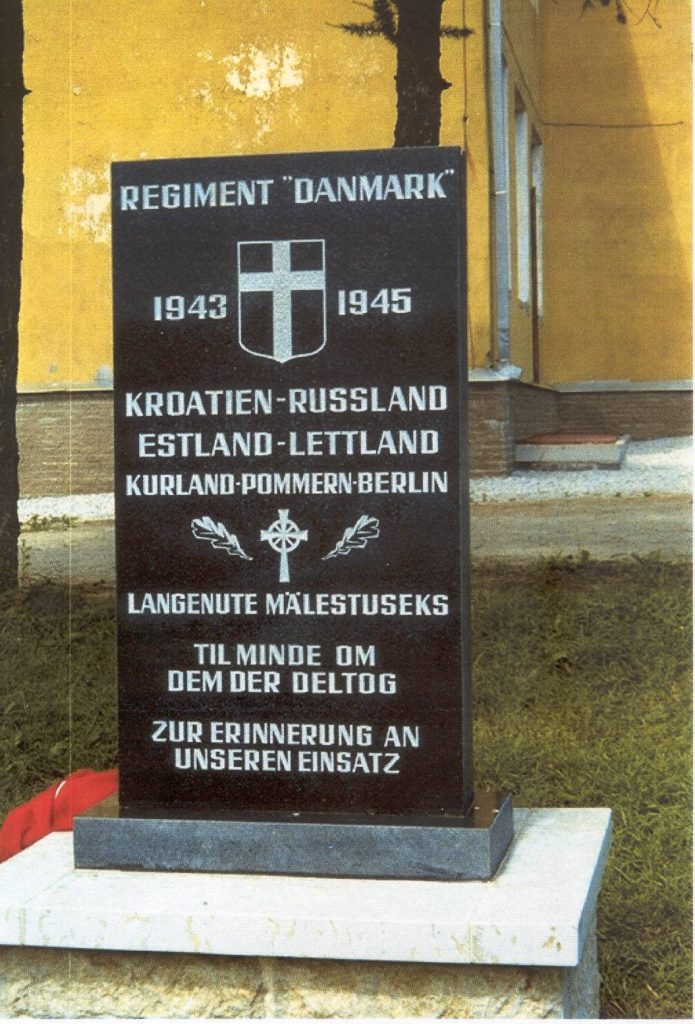
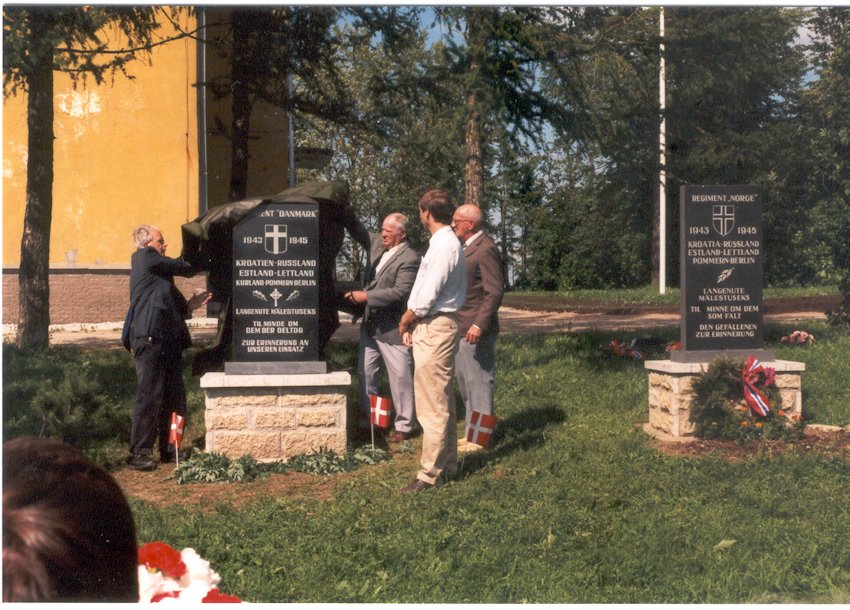
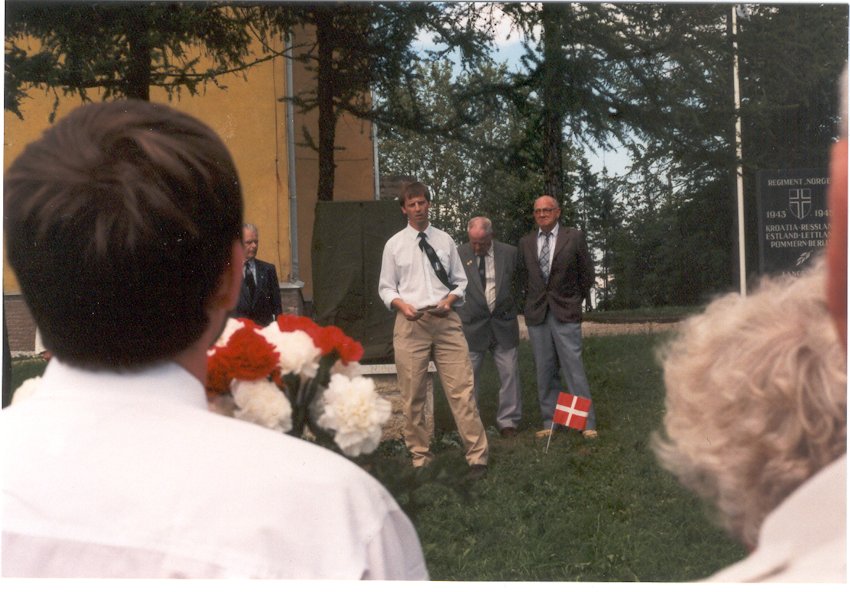
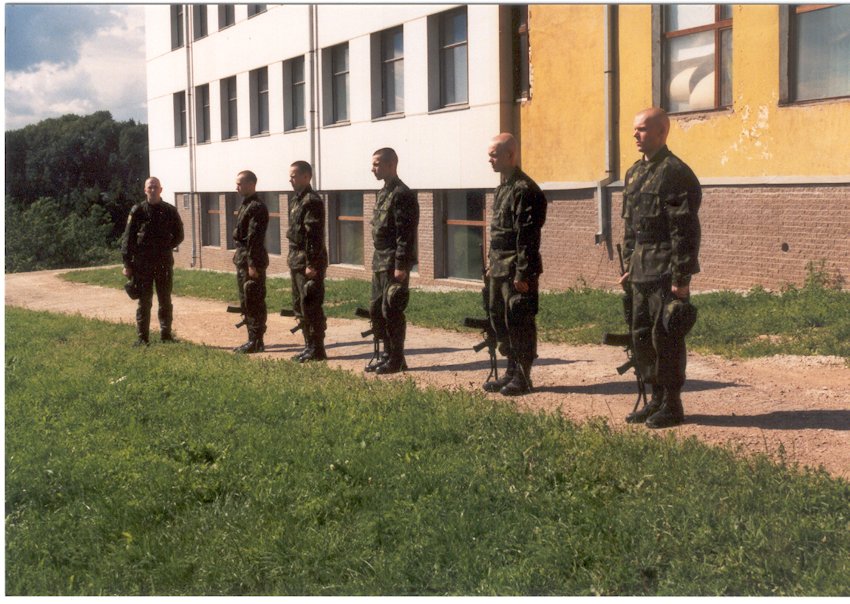
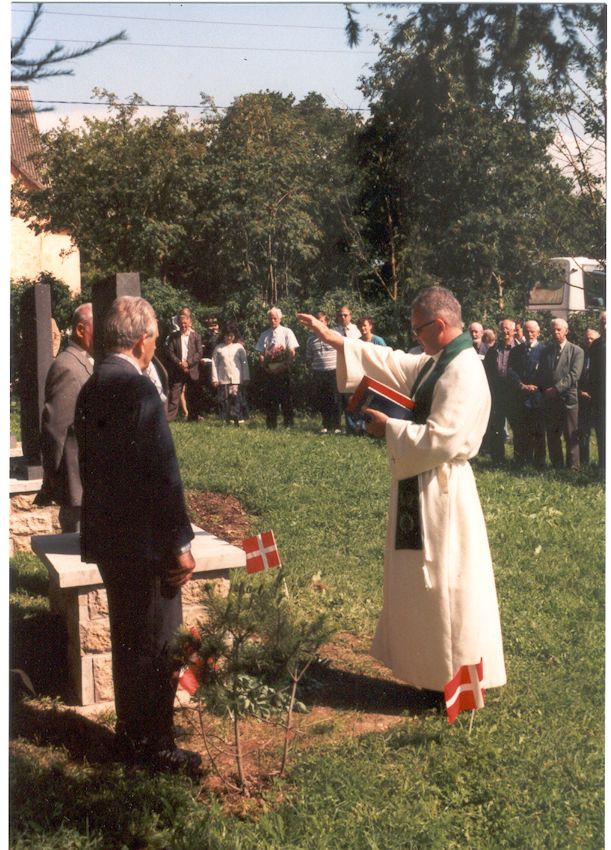
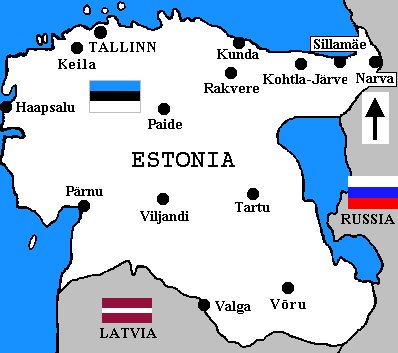
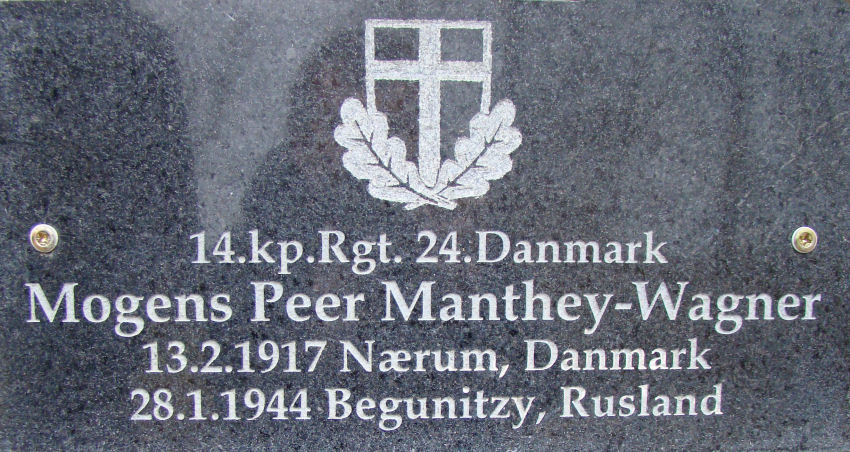
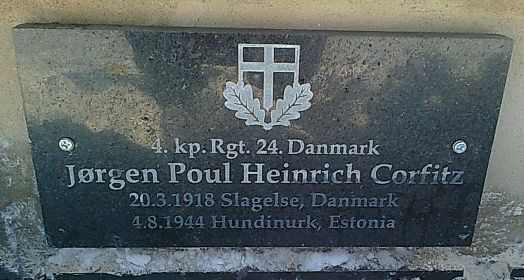
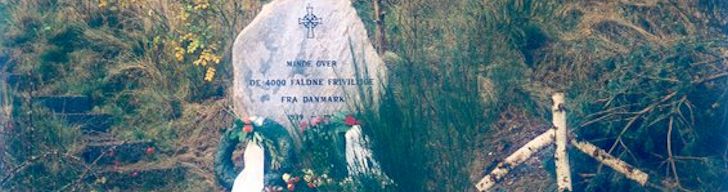
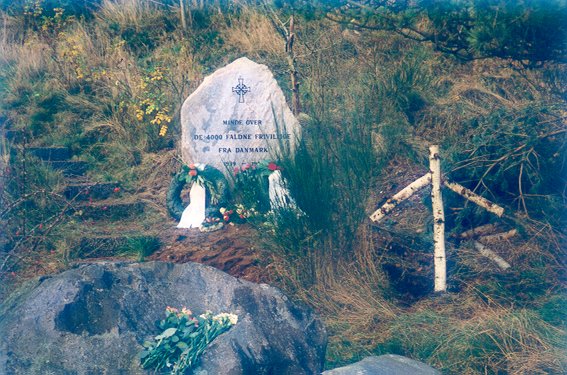
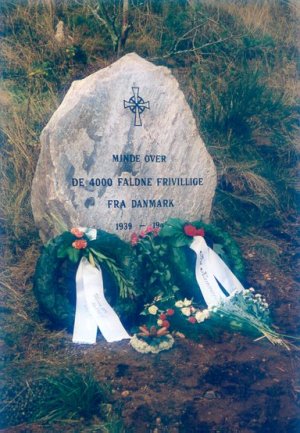
The association “Mindelunden” was responsible in 1998 for the erection of a memorial stone in Estonia at the site of an orphanage where some Danes had participated in the fighting in 1944.
The Danish name plaque from March 2013.
The association “Mindelunden” began humanitarian work in Estonia in 2009 and has since collected and distributed clothing, toys, duvets, etc., including to Russian street children in Narva, the orphanage in Vaivara, and most recently in 2012 a larger shipment of children’s clothing to the orphanage in Tartu.
The aid work is based on the desire for direct help – from family to person – where no organization should profit from it or have its costs covered.
The former Minister of Foreign Affairs Uffe Ellemann-Jensen took part in the TV programme “På slingrekurs med Caroline”, which visited the Baltic countries, including Estonia, where Ellemann is presented with the Danish memorial stone, which he, however, did not know about, but understood why it had been erected.
Transcript of audio track from TV broadcast on Monday, January 8, 2001 at 9:25 p.m. on TV2. The broadcast was called: “On a lurching course with Caroline”.
The show is about a group of very different people on a trip to Estonia, Latvia and Lithuania. The trip took place on an old coaster called “Caroline”. The show is the first part of a series.
In this broadcast, the group meets, among others, former Foreign Minister Uffe Ellemann-Jensen. At one point in the broadcast, the group has arrived in the city of Narva in Estonia. Unfortunately, I cannot show live images from the broadcast here, but here is a transcript of the audio track.
The part of the broadcast that relates to the topic on my website is reproduced below.
“It is strange how the near and distant history of Denmark continues to haunt us on this journey. From the heroic to the glorious, to that which most of us are probably less proud of. We are at Narva, at “The Blue Mountain”, where one of the most bitter battles of World War II raged for months.
During the retreat from Leningrad in 1944, the Wehrmacht held back the advancing Russians, while 100,000 German civilians fled from the Baltics and the Baltic Sea. But Hitler’s retreating war machine was not only made up of Germans.”
“This place is called The Blue Mountain, here were some of the bloodiest battles of World War II, because when the Germans’ war fortunes had turned, they had a very large force here on the narrow stretch between the Gulf of Finland and the swamps just south of here.”
And for six months the Germans and the Estonians fought against the Red Army advancing from Leningrad, which had been besieged, and the Blue Mountains are very much part of Estonian history, because the battles here made it possible for them to get many people to Sweden, so for them it was a heroic battle, and seen from their perspective on history, it was German auxiliary troops who were here to help them hold back the Red Army.
But still, it’s a shock when you come, as I did for the first time about a year ago, and suddenly see that stone standing here. A stone that I am told by local people was erected at the end of 1998 and which is a memorial stone for Regiment Denmark, which was created from the remains of Frikorps Denmark, and where quite a large number of Danish Waffen-SS soldiers participated in the battle here.
So, such a memorial stone is being erected by some circles in Denmark, commemorating the efforts of Regiment Denmark, both here and also where they have fought elsewhere, in Croatia where there have been quite serious war crimes, in Russia, Estonia, Latvia and Courland.
From here, the remnants of the troops moved on to present-day Klaipėda in Lithuania, Memel, where there was also a pocket that defended itself for a very long time against the advancing Red Army, and finally the last remnants reached Berlin.
And it’s a bit of a shock for me as a Dane to come and see it there, because it’s a piece of Danish history that we never really heard about when we were in school.
So, it is only recently that some young researchers, who have not been burdened by having lived during and immediately after the war, have begun to tell the story of how many Danes actually participated in this. It was said that no fewer than 6,000 Danish soldiers, with the blessing of the government at the time, joined the Frikorps Danmark and therefore fought in what was called the Waffen-SS.
And they were good soldiers, if you look only at the quality of the effort they made. Those who fought here, and today are considered heroes by Estonians, were incredibly good soldiers professionally.
And what is a bit of a shock, at least for many of my generation, is that we are finding out so late how many there were, and that it wasn’t just the dregs of society that we were told when I was in school, but that there were many others who were also involved.
And that is probably also the explanation for why such a stone is standing, so there must be some organization that finances this kind of thing, because it is not the only place in the Baltics that a memorial stone has suddenly appeared about an effort that we would actually rather push back into the past and bow our heads a little in shame over.”
“The shame is that those who survived were punished when they returned home.”
Uffe Ellemann-Jensen continues:
“They were punished when they came home, yes. And it’s one of the strange chapters in the history of occupation, isn’t it, that someone goes out, among them many excellent and capable officers, who had wanted to fight against Germany on April 9, but then chooses afterwards, in some kind of reaction, or what do I know, they choose to go in and fight against the Red Army.
And those are the ones who get a memorial stone here in Estonia today, and the Estonians are well aware that it is problematic for us. Look, the Norwegians were here too. There was also a Regiment Norway, and a memorial has been erected for those who came here from Norway, and you can see that there are obviously people who still come and lay flowers in front of the memorial stone.
And the third memorial stone standing here was for Flemings from Belgium, the “Unknown Soldier in Flanders”, who was also in a Waffen-SS unit that fought here.
And it was these support troops from Denmark, Norway and Flanders that were stationed here and supported the Estonians in holding back the Red Army for a full six months. The Estonians themselves say that the Blue Mountain was their Monte Cassino (note 1), so it is quite a strong part of their history.
And so, whether we like it or not, it is also part of our history, for better or worse.”
“It may be surprising that the three stones have been allowed to stand undisturbed and untouched, precisely in an area of Estonia where over 90% of the population is actually Russian. But, as I said, this is partly due to a different perception of history in these countries, and partly to the fact that the Russians are not provoked by memorials erected to those who fought against them.”
But Anne Lajrete, who is a teacher at a school right next door, witnessed the ceremony that took place when the stones were erected.”
“As far as I remember, the men who had once fought here met here, and they were Danes. They visited old battle areas, some had a harder time with the reunion than others. That’s understandable.
Sometime this winter, I don’t remember exactly when, they chose this place and we invited them to dinner here in our clubhouse. Some time later these stones were brought here, and as I understood, the stones came from their homeland.
There was of course an orchestra, because it was a memorial. Our mayor was there, speeches were made, and the historical events that have taken place in this area were remembered.
I am quite liberal-minded, I don’t judge people by their nationality, for me they are just a human being, nationality doesn’t matter. With these stones here, who would even go to war back then? No one, everyone had a mother, their loved ones they had to leave. It was painful for everyone.”
“I sit on a commission established by the Estonian President Meri. We are a group of outsiders who oversee a historical investigation into the human rights violations that have taken place in these countries, both under the German and the Soviet occupation.”
And we have started by addressing the German occupation, in order to bring many of those stories to light, and we meet from time to time to hear historians report, who are working through the tons of documents stored in the basements of the old interrogation centres.
And these are disturbing stories we sometimes hear, and they are also stories in which Danes have been involved, and which have been somewhat hidden away in the lack of historical awareness that one unfortunately often finds in our own country.”