
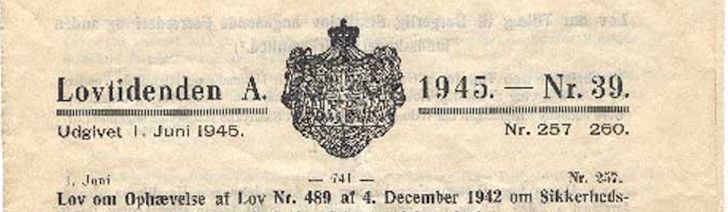
The law with retroactive effect, under which most volunteers were convicted, was “Act No. 259 of 1 June 1945 Supplementing the Civil Penal Code Concerning Treason and Other Activities Harmful to the Nation.”
“A law with retroactive effect” means imposing punishment for something that was not illegal at the time the act was committed. This is something that the civilized world normally rejects.
Only in two countries in the entire world have governments accepted the enactment of such laws, namely Denmark and Siam, now Thailand. In Siam, the judges refused to convict on this basis, whereas the judiciary in Denmark accepted it and convicted the volunteers.
It states in the text:
“Section 1 of the Act states that this provision shall be applied to actions carried out during the period from 9 April 1940 until one year after the Act entered into force.”
“Furthermore, Section 1 states that actions carried out on or before 29 August are exempt from punishment.”
More than 100 jurists sent a letter of protest to the government regarding this law and urged that voluntary military service alone be exempt from punishment, but the protests were rejected by representatives of the resistance movement.
Professor of Jurisprudence W. E. von Eyben writes in the book “Thi kendes for ret” (1968) that the government had no choice but to punish those whom the resistance fighters demanded be punished, which German sources explain as follows:
“The saboteurs threatened to shoot the approximately 40,000 Danish citizens whom they had arrested without legal authority if they did not get a law under which these people could be punished. Thus, the ‘law with retroactive effect’ was forced through.”
“Also those who, according to Section 1, were exempt from punishment because their actions had been completed before 29 August 1943, were punished.”
“Whether the German sources are correct, I believe, can be debated.”
“That the Danish judicial system convicted people on this basis indicates that the courts were not independent, as required by the Constitution.”
“Section 4 of the Act concerns the penalties that could be imposed, and only imprisonment and capital punishment are mentioned. Capital punishment is defined as execution by shooting. Imprisonment is defined as a prison sentence ranging from four years to life.”
“Section 6 of the Act refers to the loss of ‘public trust’, meaning that, in addition to any prison sentence, a person could also be deprived of, among other things, the right to vote and to stand for election.”
“One could not be employed in public-sector jobs, lost the right to practice as a doctor, lawyer, or in any other profession requiring public authorization. Furthermore, one could lose the right to obtain a business license as a self-employed entrepreneur.”
“This became an additional sentence that was imposed on the vast majority, almost as a matter of course.”
“Section 10 of the Act was the provision under which most members of Frikorps Danmark were convicted:”
“Any person who has recruited for, or allowed themselves to be recruited into, German military service shall be punished with imprisonment. Where special considerations apply, the sentence may be reduced, and under entirely exceptional circumstances, prosecution may be omitted. Imprisonment shall furthermore be imposed on any person who has served in a corps that operated in association with the Occupying Power against the lawful institutions of the Danish State or its citizens, or who otherwise, in German service within this country, has carried out activities of a police nature.”
“For any person who, after 19 September 1944, has carried out activities of a police nature through service in the Hipo Corps, the Sommer Corps, or a similar organization, the penalty shall be capital punishment or imprisonment for not less than 10 years.”
(The date referred to in Section 10, 19 September 1944, was the date of Germany’s arrest of the Danish police.)
As stated in Section 1 of the Act, the minimum sentence was four years’ imprisonment. The first verdicts handed down against former Frikorps/Waffen-SS members resulted in acquittals, but a storm of protests and appeals led to a consistent change whereby four years’ imprisonment was imposed, regardless of what the individual had done. Later, as more and more cases came before the courts, sentences ranged from two to four years’ imprisonment for offenses of a similar nature. In one case where the district court imposed a sentence of less than four years, the high court increased the sentences and only partially changed its practice after being burdened with a large number of complaints and appeal cases.
In 1945, the prosecution authorities showed great zeal in securing convictions, even in “minor” cases. One man, whose son had served in Frikorps Danmark, was considered to be sympathetic to the German Wehrmacht. In 1942, he received an approach from the Wehrmacht. They wanted to install a telephone in his home so that they could make calls if their own telephone lines were cut. He was informed that if he opposed the installation of the telephone, it would be installed anyway. He did not object. The telephone was removed again in 1944. The lower court assessed this “offense” at four years’ imprisonment. The high court acquitted him.
Of these, approximately 3,300 convictions were handed down to former soldiers of the Waffen-SS (Frikorps Danmark, Division Wiking, Division Nordland, etc.).
As previously mentioned, in accordance with Section 1 of the Act, the minimum sentence was four years’ imprisonment.
The average sentence was 2–3 years, taking into account any time spent in Allied captivity and detention in a Danish internment camp or prison.
The political changes in Europe—the Cold War—as well as gaining some distance from the war, also led to a more realistic view of the war and its actions. This resulted in more lenient sentences and a general reduction of penalties to 1–1½ years, though not for political convictions such as cases involving members of the Schalburg Corps, HIPO, or the ET organizations.
Approximately 100 Danish officers served in the Waffen-SS and were given severe sentences as a result of their greater responsibility in wartime actions.
By an Act of 25 May 1945, all officers were dismissed from the Danish Army without pension and without criminal proceedings being initiated against them. The circulars issued by the Ministry of War in 1941 (regarding re-entry into the Danish Army, rank, pension guarantees, etc.) were disregarded.
Whether this constituted a breach of promise, or whether the officers should have realized that the government’s assurances were given under compulsion because it may have been under pressure from the German occupying power, remains a subject of heated debate to this day.
A captain had volunteered for Frikorps Danmark (after having left active service and enlisted in the Waffen-SS before 9 April 1940) and served on the Eastern Front. He later served in Division Wiking and other units of the Waffen-SS.
He was sentenced by the court to two years’ imprisonment, with the court emphasizing that “as a captain in the Danish Army, he must have realized that by allowing himself to be recruited into German military service at a time when Denmark was occupied by German troops, he was committing an act of treason against his country.”
The judgment emphasized that the sentence had been reduced to two years because of the circulars issued in 1941. The High Court subsequently increased the sentence to five years, with the following comment:
“the defendant cannot be presumed to have believed that he was acting in accordance with instructions from a lawful Danish authority.”
The Supreme Court reduced the sentence to three years. In this case, three judges believed that the High Court’s judgment should be upheld, while three other judges wished to reduce the sentence to one year, with reference to the “authorization.”
One of the judges even considered it “embarrassing” to punish the officer. The viewpoints expressed in the judgments above were reflected in most of the cases against the Danish officers.
Other Danish officers who were convicted include, for example, Captain Erik Lærum, who was sentenced by the lower court to four years’ imprisonment. The High Court increased the sentence to eight years’ imprisonment. The Supreme Court then “reduced” the sentence again to four years’ imprisonment.
Lieutenant Colonel Christian Poul Kryssing was sentenced in November 1946 by the Copenhagen City Court to eight years’ imprisonment, which considered it an aggravating circumstance that he had continued serving in the Waffen-SS after being removed as commander of Frikorps Danmark in 1942.
He was presented as having been a “symbol” of cooperation with Germany and was therefore to receive a collective punishment as a symbolic measure.
The High Court subsequently reduced the sentence to four years’ imprisonment, as disagreement arose over whether Kryssing’s legally sanctioned appointment to lead the Frikorps should be regarded as an aggravating or a mitigating circumstance.
No Danish soldier in the Waffen-SS was sentenced to death solely for his actions on the Eastern Front. For example, K. B. Martinsen was sentenced to death and executed on the basis of his actions in Denmark as commander of the Schalburg Corps.
A verdict that remains controversial, and several people have argued that he was to die for political reasons. He knew too much and was too politically involved.
If you have become more interested in the legal reckoning after the war, I can recommend Ditlev Tamm’s more than 800-page work from 1984, “The Legal Reckoning After the Occupation.” In this work, Tamm examines the circumstances and the challenges involved in having to deliver judgments under the conditions that existed at the time.
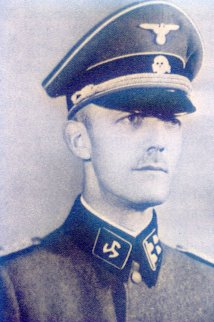
Lieutenant Colonel Christian Poul Kryssing, 1940
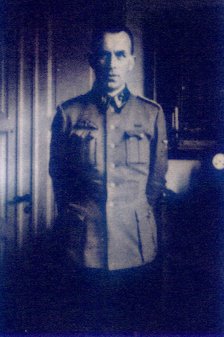
The Danish Captain Erik Lærum
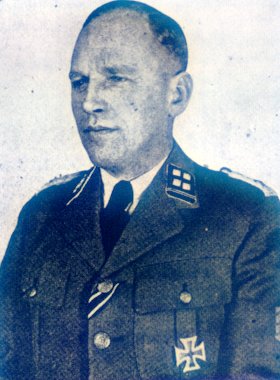
Commander of the Schalburg Corps Knud Børge Martinsen, 1944