
One morning, I believe it was 23 May 1942, things finally became serious.
At least for some of us, for that was when we saw our 1st Company rolling through the town on its way out toward the H.K.L.
But how we grumbled, for we had still not received any orders.
We were not kept waiting for long, however, because around midday we were ordered to the highest state of alert, and at 1600 hours came the order to be ready to board the vehicles with all our equipment at 1900 hours.
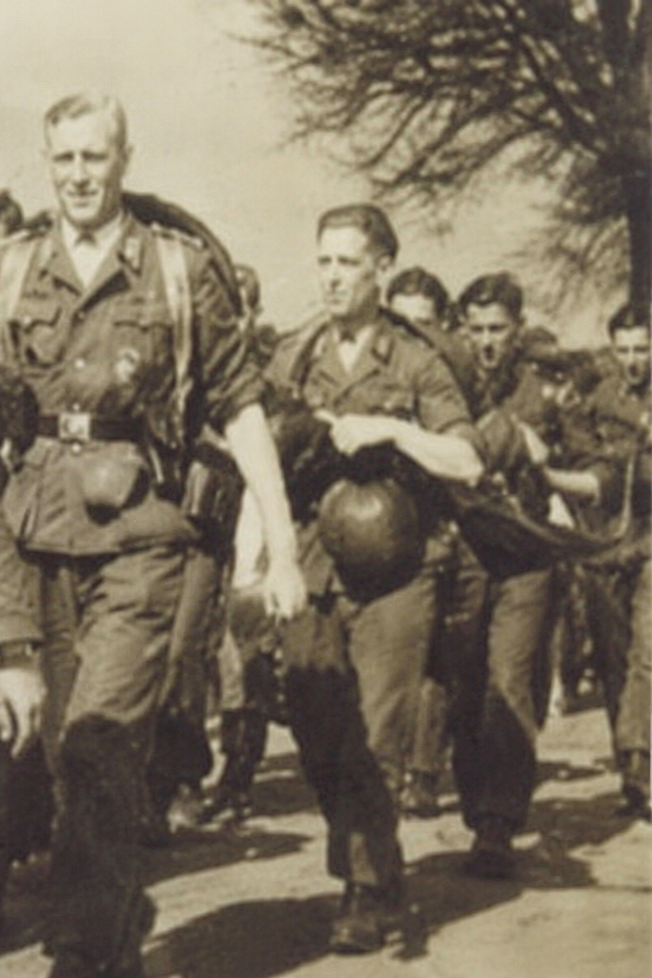
We quickly packed our gear and then ran about wildly with joy until, at 1900 hours, we climbed aboard the long line of Opel and Mercedes trucks.
Then we were on our way to the place where a hundred good comrades would have to give their lives in the sincere conviction that by doing so they were serving the true welfare of their fatherland.
Men who found their final resting place in this hell of swamps, wilderness, and endless wastelands.
Men who asked only for the freedom to protect their loved ones at home and their fatherland, even if it should cost them their own blood.
Once one has seen these men in the fighting that we subsequently endured, all the opponents’ theories about lust for power and personal gain as their motivation fall hopelessly to the ground.
No material advantages or emotions could sustain any human being through the hell of blood and fire that followed.
I feel a heartfelt relief that these men cannot witness the ruthless, brutal, and vengeful purging and destruction of those who think differently, which has become peace’s gift to the finest men and women—those who did not cowardly betray their ideals and comrades (especially those who fell) when the tide of battle turned and defeat came.
As if defeat itself, together with all the shattered illusions, were not punishment enough for having fought on the side of the weaker power.
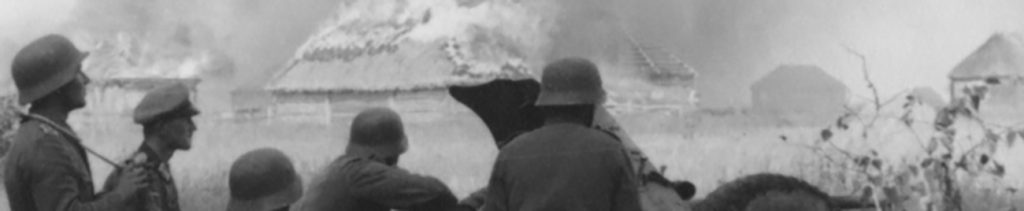
On the way to the H.K.L., we already saw some of the war’s cursed aftermath in the form of collapsed houses, shell craters, shattered trees, dead animals along the road, and much more.
The road was, as usual, terrible.
It had been built from tree trunks laid closely side by side, making it dreadfully uneven to drive on.
In some places there were deep mud holes, and only with great difficulty did we manage to get through them.
The fact that we got through at all was mainly due to the seasoned and experienced drivers from the Totenkopf Division, who, with admirable skill, guided the vehicles along the poor roads and at certain points through enemy artillery fire.
In several places where trees did not block the view of the road, the enemy fired mortars at us, so that shell fragments flew around our ears.
For that reason, the drivers gave the vehicles extra speed, and they shook violently on the uneven roads.
At one point, we became stuck on such an exposed stretch and had to take shelter in the roadside ditch from the shellfire until the vehicle was freed.
Even a lone ambulance carrying wounded soldiers was always fired upon by the Russians, despite being clearly marked with large Red Cross symbols.
These vehicles, which operated continuously, were almost all riddled with bullet holes like sieves.
As for us, the journey went well and in high spirits. Battle songs and soldiers’ songs were sung on a grand scale.
The cheerful fellows kept producing one joke after another.
I can safely say that whatever happened afterwards, the men of the Frikorps never lost their good spirits, nor the calmness and good humour that characterize the people of the North wherever they go in the world.
In Biakowo, we stopped and left the vehicles.
It was a very small village, completely surrounded by forests on all sides.
It lay on a flat elevation and had been totally destroyed by the war and evacuated of all civilians.
The only things remaining were our medical station, radio station, kitchen, depots, stables, and quarters for the soldiers.
All of these facilities had been dug deep into the ground, with several feet of earth piled on top.
Deep within the edge of the forest, our artillery positions had been constructed.
On the southern edge of the village, the Louvat River flowed past, muddy and dirty from the turmoil of war.
Here we spent a restless and cold night in some bunkers that had been made available to us for sleeping.
During the night, a fire broke out in a bunker occupied by some Germans.
There was a tremendous commotion, because the flames could be seen from far away and made an excellent target for enemy aircraft.
It did not take long before a few “coffee grinders” appeared (a small bomber aircraft frequently used by the Russians in these areas, which buzzed like a coffee grinder in a grocer’s shop, hence the name) and dropped several bombs around the area.
But we all escaped unharmed.