
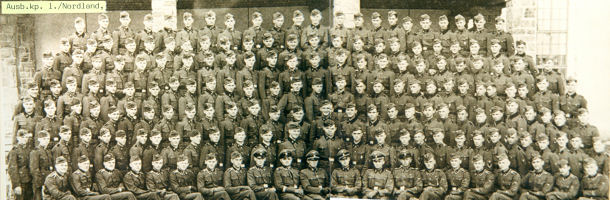
Shortly before the attack on the Soviet Union (Operation Barbarossa), the division (approx. 20,000 men) with several thousand vehicles was moved to the assembly area near Lublin.
Three army groups (North, Center, and South) were to attack the Soviet Union on 22 June 1941, and the division was assigned to Army Group South.
It was not until 1 July 1941 that Division “Wiking” received orders to move out, with the objective of the attack being the city of Tarnopol, approximately 150 km inside the Soviet Union.
After the battles near Tarnopol, the division (with Regiment “Germania” and Regiment “Westland”) attacked the towns of Satanov and Gusiatyn on 6 July 1941 (southeast of Tarnopol).
In the first half of July, Division “Wiking”, due to heavy resistance, advanced only about 200 km into the Soviet Union, but in the following days it was able to advance a further 200 km as Soviet forces withdrew toward Kyiv.
Division “Wiking” was now placed at the very front and fought heavy battles in the following days against Soviet armoured and infantry forces.
Regiment “Nordland” did not take part in these battles, as the regiment had been temporarily transferred to III Panzer Corps as reinforcement.
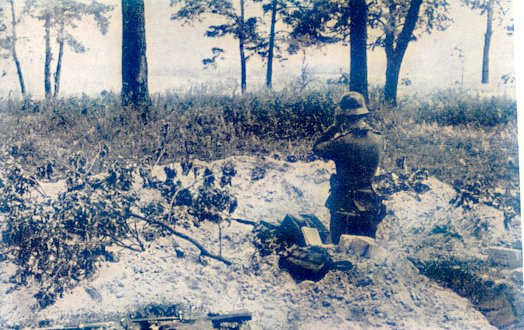
Until August 1941, the division took part in the German advance to the southeast, where Army Group South gradually encircled two Soviet armies near the city of Uman.
Division “Wiking” was repeatedly subjected to attacks by Soviet forces attempting to break out of this encirclement.
Since the start of the campaign on 22 June 1941 and up to mid-August 1941, the division lost about 400 men and had approximately 1,400 wounded.
Afterwards, the division was deployed in the fighting to establish bridgeheads along the River Dnieper.
In late September 1941, Regiment “Nordland” crossed the Dnieper, and about four days later the rest of Division “Wiking” followed.
Up to the end of September, the division took part in intense fighting.
In particular, Regiment “Nordland” was heavily affected after 11 days of constant artillery bombardment, with 26 Danes killed and 38 wounded.
On 18 September 1941, Kyiv was captured, and Division “Wiking” was able to be released for other tasks.
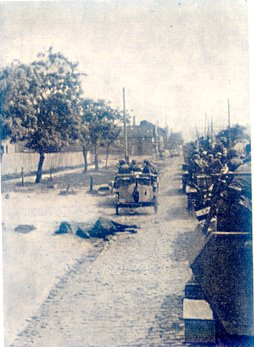
On 28 September 1941, the division attacked together with Panzer Group 1 towards the southwest, where the task was to secure the eastern flank of the offensive.
On 10 October 1941, the attack continued further east towards the River Don.
After a couple of days, the offensive more or less came to a halt due to the weather, which made almost all roads impassable.
In addition, the supply lines had become so long that there was a severe shortage of fuel and ammunition.
The heavy fighting since the start of Operation Barbarossa had by now resulted in over 1,000 killed and approximately 3,000 wounded, which corresponded to about 20% of the division’s total manpower.
Despite the fallen, the wounded, and the weather having reduced the division’s combat strength, it succeeded on 20 October 1941 in capturing the designated objectives.
A new objective – the city of Rostov – was assigned to the division, and on 23 October 1941 the division advanced, after fuel had been supplied, towards the Mius and Krypka rivers.
Division “Wiking” was again assigned flank security tasks and suffered very heavy losses during this attack.
Once again the operation was slowed by a shortage of fuel, but it was especially the onset of the Russian winter that brought the advance to a halt.
This meant that it was not until 17 November 1941 that the attack really gained momentum.
Division “Wiking” was subjected to heavy counterattacks, and in particular Regiment “Westland” and Regiment “Nordland” were hard hit.
Despite increasingly strong counterattacks, the city of Rostov was nevertheless captured, but on 28 November 1941 it had to be abandoned due to a strong Soviet attack.
On 1 December 1941, among others, Division “Wiking” was ordered to withdraw to the Mius River, where it was to take up winter defensive positions.
The winter defensive positions were effective, and the war now came to a standstill for many months, during which the soldiers’ “experiences” mainly consisted of repelling counterattacks and surviving the Russian cold, which at times reached as low as minus 40 degrees Celsius.
During the winter of 1941 and the spring of 1942, Division “Wiking” received new personnel, so that the division was once again almost up to full strength.
The worst issue for Division “Wiking” was, however, that the vehicles lost had not been replaced, which contributed to the division no longer being able to operate as a fully motorised division.
Despite many strong Soviet counterattacks, it was possible until around March 1942 to hold all of the army group’s winter defensive positions.
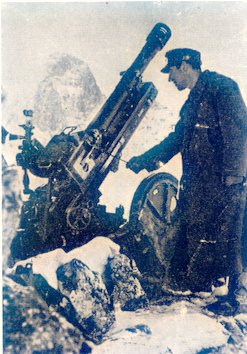
In the spring and early summer, both the Germans and the Soviets planned a summer offensive, which was expected to bring the war on the Eastern Front to an end.
The summer offensive began on 19 July 1942, with Rostov once again as the objective.
On 23 July 1942, the Soviet defensive positions were overcome, and by 25 July 1942 almost the entire city was in German hands.
The next objective lay to the southeast, where the Caucasian oil fields were to be captured.
The Soviets withdrew voluntarily (?), and within 14 days Division “Wiking” advanced almost 400 km without encountering significant resistance.
On 10 August 1942, the first oil wells were captured, but almost all of the oil fields had been blown up during the Soviet withdrawal.
Division “Wiking” and other units were then ordered to advance towards the Black Sea and the Soviet naval base of Tuapse.
The advance would mean that the division would have to pass through high mountains and narrow roads, which would be difficult for the division’s nearly 2,000 vehicles.
For the next four weeks, Division “Wiking” was therefore assigned security duties in the Maikop area, while mountain troops from other units advanced towards the Black Sea.
On September 8, 1942, the OKW (Oberkommando der Wehrmacht) decided that the 1st Panzer Army should have two divisions subordinate to it as reinforcements, one of which was Division “Wiking”.
On September 16, 1942, the division was transported by rail through the conquered areas and to the important passes through the Caucasus.
On September 26, 1942, the attack against the important passes began, but as the passes provided good defensive positions for the Russians, the attacks became unbelievably bloody, which particularly affected Regiment “Nordland”.
On October 6, 1942, the first attack target, Malgobek, was captured, after which the attack stalled due to fierce resistance.
In November, the “Wiking” Division was moved from the Malgobek area.
The division was now more or less worn out, as the fighting had cost approximately 3,600 dead and 10,000–12,000 wounded.
For the next two months, Division “Wiking” was flanking the 1st Panzer Army’s western flank, and everything went relatively smoothly.
On December 24, 1942, the 1st and 2nd battalions of the “Wiking” Division were moved north by rail to the army’s rear to defend the area against Russian units that had broken out from Stalingrad.
Just before the turn of the year 1943, the “Wiking” Division was moved north from the Caucasus to the area southwest of Stalingrad (the Kalmyk steppe), where the task was to block the Russian advance towards Rostov.
The fighting on the Kalmyk steppe lasted until February 1943, after which the “Wiking” Division was moved back across the Don River.
In February 1943, the “Wiking” Division, together with two armored divisions, stopped the advancing Russian forces, after which there was calm on the front until April 1943.
Division “Wiking” was sent to rest positions, where the unit received new replacement personnel and vehicles. Its strength was now down to approximately 5,000 men.
During the rest period, Regiment “Nordland” was moved away from the eastern front, whereby a large part of the Danes also disappeared from the eastern front.
Regiment “Nordland”‘s 1st and 2nd battalions were sent to the Grafenwöhr training area, where the Danish and Norwegian volunteers were to form the basis of the formation of a new division, Division “Nordland”, under III German Panzer Corps.
Regiment “Nordland”‘s 3rd battalion, which consisted mainly of Finnish soldiers, was sent home to Finland at the request of the Finnish government.
On May 12, 1943, Regiment “Nordland” was disbanded.
However, around 180 Danes remained in Division “Wiking” as they served in other regiments in the division. The majority of these served in Regiment “Germania”.
The remnants of Division “Wiking” remained on the Eastern Front until January 1944, when the division and seven other divisions were surrounded by the Russians in the so-called Cherkassy Cauldron.
In early February 1944, the trapped divisions attempted to break out of the cauldron.
50,000 Germans died in the fighting in the Cauldron, and approximately 30,000 Germans escaped during heavy fighting.
Division “Wiking” was the spearhead of these battles, and that was perhaps why only about 4,500 men from the division survived the breakout attempt.
Division “Wiking” was then sent for redeployment in Poland, where the division stayed for approximately three months.
The Russian advances then meant that Regiment “Westland” and Regiment “Germania” were deployed in the battles for the city of Kowel in Poland.
The “Wiking” Division then participated in one battle after another without rest breaks, including in the battles for Warsaw.