
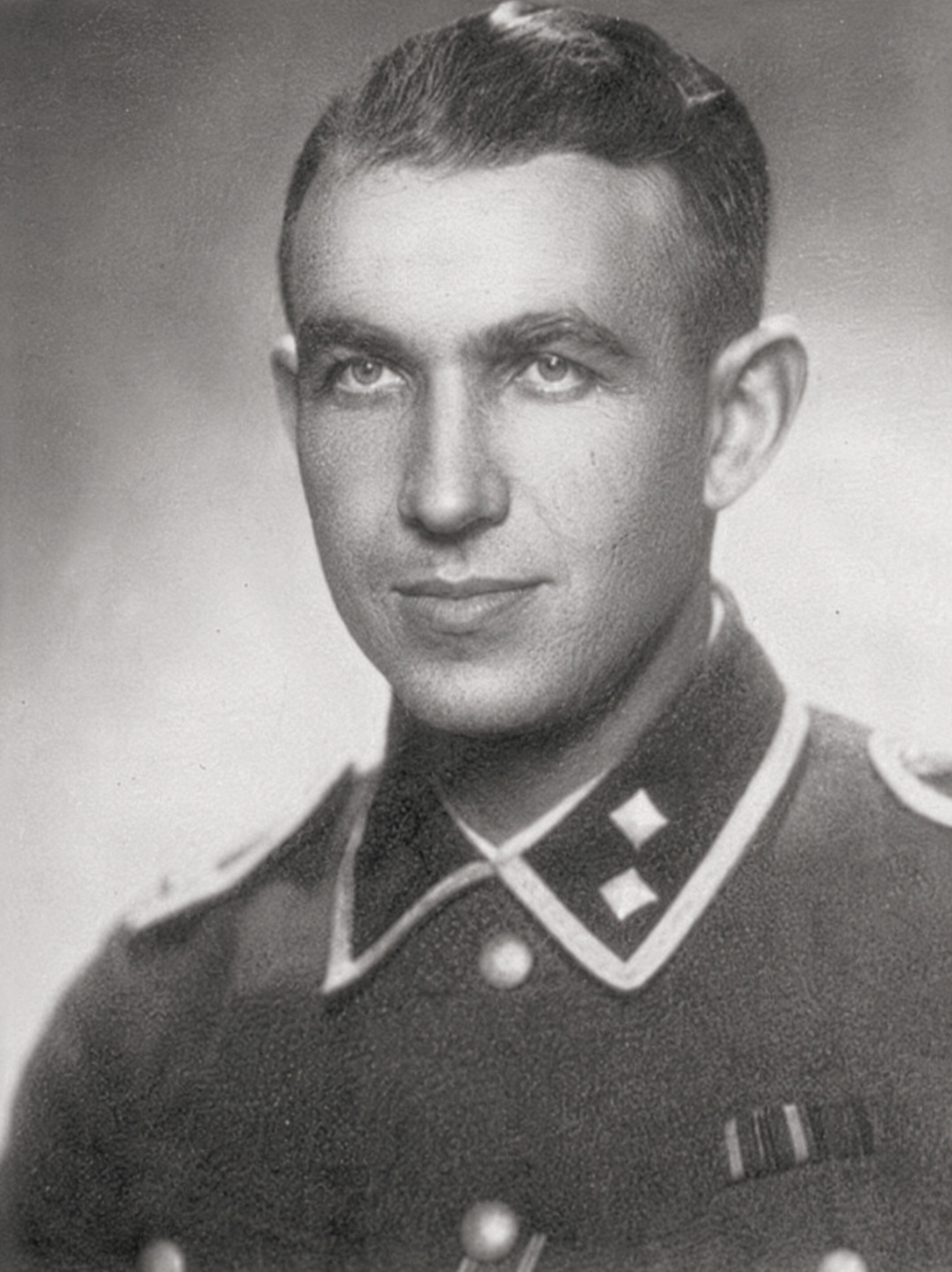
Article from the German military magazine “Der Freiwillige”, written by H. T. Nielsen.
(translation of image 1)
Otto Brabänder was born on January 4, 1914, in Waldgrehweiler.
Since 1928, he had been a member of the HJ, and from 1932 of the SA, which entitled him to wear the Honor Chevron for the “Old Fighters.”
From March 4 to 29, 1934, he attended Sports School III in Lauchingen, and from January 5 to February 23, 1935, the SA Sports School in Degerloch.
He belonged to the SA Auxiliary Unit “Horst Wessel Barracks” in Mainz from April 24 to October 31, 1935.
After that, he served with the 13th Company, Infantry Regiment 63, in Ingolstadt until October 28, 1938.
At the Reich Party Rally in 1938, he was impressed by the Schutzstaffel (SS), joined it, and, since he wished to remain in the southern region, chose the SS “Totenkopf” Standarte “Oberbayern” for his further service.
On November 28, 1938, he joined the 13th Hundertschaft and, from May 12, 1939, was transferred via Oranienburg to Königsberg, where he was stationed in the exhibition hall.
As a member of the SS-Heimwehr Danzig, he took part in the fighting for the Danzig Post Office in September 1939, for which he later received the Honor Badge of the SS-Heimwehr Danzig as a member of the HWD.
In addition to the Iron Cross, both First and Second Class, and the Wound Badge in Silver, he also wore the Infantry Assault Badge in Bronze.
Later, he was assigned to SS Infantry Regiment 3 “Totenkopf” and, in 1941, to the “Free Corps Denmark” as an infantry rifle instructor/platoon leader in the 4th Heavy Company of the Free Corps “Denmark.”
Further assignments included the 13th Company of SS Infantry Regiment 11 and the 3rd Company of SS Regiment “Der Führer.”
In 1943, Brabänder was assigned to the 3rd (A) Company of SS Infantry Gun Training and Replacement Battalion 1 in Breslau-Lissa, and at the end of 1944/beginning of 1945 he was transferred as a replacement to SS Volunteer Grenadier Regiment 84 “Landstorm Nederland,” where he served until 1945.
He was taken prisoner in France in May 1945 and was later extradited to the Netherlands. Since the Dutch mistakenly assumed, because of his surname, that he was Dutch, he was convicted of treason by the “Control Commission Court” in the Kingdom of the Netherlands under Article 101 of the Dutch Penal Code.
Only the birth certificate that was later produced was able to spare him from an even longer period of imprisonment.
After his release, he lived with his wife and children in South Westphalia until his death.
Otto Brabänder was always available to many people with his friendly nature and personable manner, and he always answered questions from the younger generation.
We will remember him fondly, and he will remain unforgettable in the hearts of his comrades.
Your young friend, Stefan B.