
Partisan
But back to Savodskoje in March 1943. We stayed there for three to four weeks. It was a peaceful time. The Russians on the opposite side of the Donets kept their heads down and only carried out a few small mortar attacks. From time to time a night reconnaissance patrol would come visiting, but they never managed to break through our lines at the riverbank. Then things flared up at another point on the front, and as so often before, there was suddenly a need for “Wiking”. We were the rapid division, used to being moved from hotspot to hotspot, also because we were fully motorized. Where it became too difficult for the Wehrmacht infantry and other units, requests were often sent for the SS divisions.
Now it concerned an area further north — still in the Donets basin — where there was lively activity from Ukrainian partisans, while at the same time a build-up of regular Russian forces was taking place on the other side of the river. This had been discovered by the division’s observation aircraft. We moved into the new positions after a Wehrmacht battalion had taken over Savodskoje. It was indeed true that there were many partisans behind our lines.
At night the notorious “Sewing Machines” came — our nickname for an old single-engine aircraft the Russians used for night raids over German positions and the rear areas. Its engine really did resemble the sound of a sewing machine. These aircraft were suspected of supplying partisans with weapons and ammunition, which was confirmed by the fact that fires were almost always discovered in connection with their visits, in the vast fields at a suitable distance from the villages where German soldiers were stationed. No one doubted that the fires were lit by partisans in order to guide the “sewing machines”’ pilots to the drop zones.
Patrols from our battalion kept a sharp watch every night for the nocturnal fires. On several occasions, fast motorized groups succeeded in reaching the drop zones before the partisans had managed to escape with their loot from the “sewing machines.”
What happened to such captured partisans?
It was one of my most disturbing experiences on the Eastern Front. Most of them were shot without mercy. The commander of the company to which the patrol in question belonged would designate someone from the patrol to “finish the job” after returning from such an expedition. Then the executioner would trudge off into the rear area with the partisan in front of him, a rifle ready to fire. A shot would be heard, and a little later the soldier would return.
“The SS division Wiking does not have time to send such prisoners back to camps far behind the front,” our battalion commander said.
I did not like it, but by then I had become enough of a soldier through the hard life we were leading that I did not think about it all that much. What could I have done? I was glad I was never ordered to take such a prisoner out for a “walk”.
But it did happen that a few partisans were taken prisoner whom some company commander considered to be of special importance. This could be because he appeared suspicious in his manner. Then he would be interrogated by the security officer at regimental headquarters. The transfer of such a prisoner was most easily and quickly carried out using a motorcycle courier.
That task was assigned to me on one occasion.
The partisan was a man of about 40, dirty and ragged and, naturally, unshaven because of the kind of work he had been engaged in. But there was an intelligent glint in his eyes.
At that moment there were no other motorcycle couriers available except me. But my motorcycle had no passenger seat. Normally such prisoner transports were carried out on a “Krads” in such a way that the prisoner was placed in the sidecar, and the motorcycle messenger, who usually sat there, would take the back seat.
That was not possible in this case. I had to set off for the regiment alone with the partisan, without an escort to keep an eye on the prisoner. He was tied with his hands behind his back and placed in the sidecar, and I was issued a pistol in addition to the usual carbine I always carried over my shoulder. If the prisoner tried to escape, I could reach for the pistol faster than the rifle.
We set off at dawn. It was quite a long way to the regiment’s headquarters in a larger village. We passed through a forest, and I had to drive very slowly, because, as usual, there were many large holes in the road.
Suddenly, while I had my full attention on the ride, the partisan jumped out of the sidecar, rolled down into the roadside ditch, quickly got to his feet—although his hands were bound behind his back—and started running into the forest.
As quickly as possible I stopped the Zündapp and grabbed the pistol. I fired four or five shots and hit him in the back. He fell over. He was very seriously wounded and died a few minutes later. During that time he stared at me continuously with hatred. Not a sound came from his lips. He did not complain, even though he must have been in severe pain from the two or three bullets that had hit him in the upper body.
I could do nothing. I had previously been confronted with comrades who were badly wounded and already knew when things were so serious that nothing could be done to help.
When he had breathed his last, I dragged him back to the motorcycle again, with difficulty got him placed in the sidecar, and turned around to go back to the battalion. There was no point in going to the regimental headquarters with a dead partisan. He could no longer have told anything.
But—this was the first man I killed in the war in Russia. And not even in regular combat. I felt it as a murder. I have never gotten over it.
In the following text there may be passages or viewpoints that can seem to glorify what happened. These texts/viewpoints are the author’s, not mine.
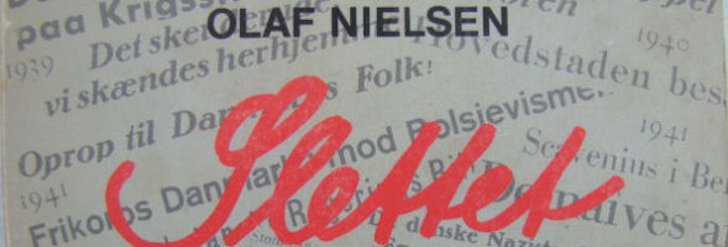
A few years after the war, Olaf published his book.