
It is true that a campaign of hostility developed against Kryssing, partly because he was unable to control the mixed group that the Free Corps consisted of, but probably more because the Danish government did not keep its promises.
The Free Corps was created as an emergency solution: in order to appease the Germans, the Danish government had promised to send a conscripted regiment to the front in Finland. However, the Finns refused, as they did not want to take part in an advance into the Soviet Union, but only to fight to regain the original Finnish territories they had been forced to surrender after the “Winter War”.
It appears from Prime Minister Buhl’s statement in a radio speech that “the Eastern Front volunteers are lightning conductors; without them a forced conscription would have had to take place.” Thus, the Danish government had promised to provide a troop contingent, and therefore Danish politicians negotiated the sending of a contingent of volunteers to the Eastern Front and persuaded Kryssing to lead this corps.
Kryssing protested, referring to the fact that he was an artillery officer. To remedy this, the said Captain Thor Jørgensen was to be appointed staff officer, which the Minister of War, Brorsen, and the Ministry of War’s director, General von Stemann, arranged.
Kryssing did not master the German language; Jørgensen did, and he was a fully trained Danish officer. It must therefore be regarded almost as sabotage against the Danish unit that the Germans sent Captain Jørgensen to an officers’ school, and the purpose can only have been to render Kryssing ineffective.
Let it be said plainly: Kryssing hardly possessed the necessary firmness to control the mixed group from which the Free Corps was composed. It had been expected that a sufficient number would volunteer from those who had previously served in Denmark, but when this did not happen, a number of those who signed up “for German service” were enlisted instead. This resulted in a very mixed and unruly group.
It should further be noted that it is not usual for a battalion commander to concern himself with the discipline and training of individual companies. He would at most intervene when company leadership failed to maintain proper order.
When it was difficult to get the training underway, this was also due in particular to the Danish government. The Free Corps was, as the commanding Danish general Gørtz put it, “a detached part of the Danish army,” for which Denmark was to provide equipment.
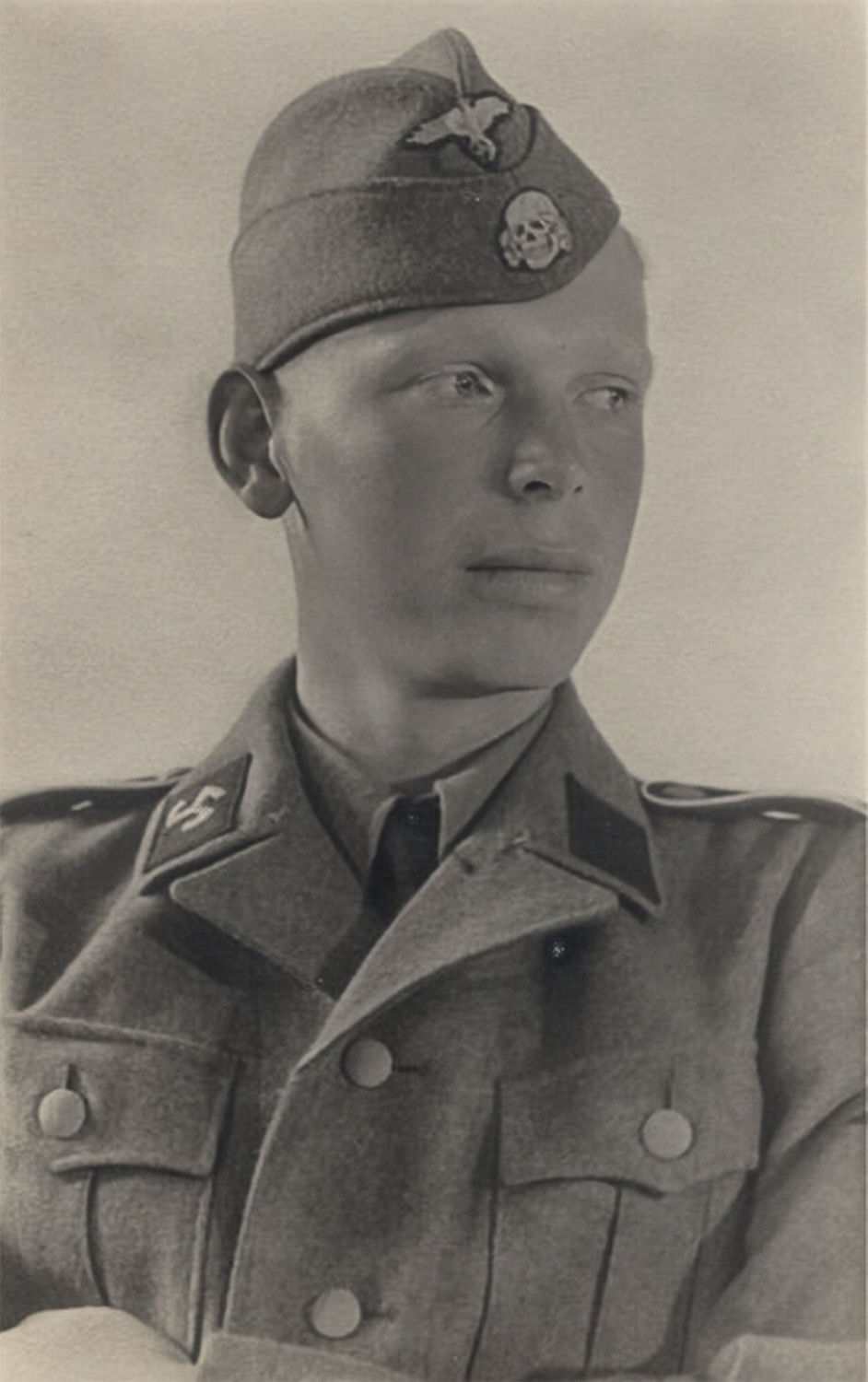
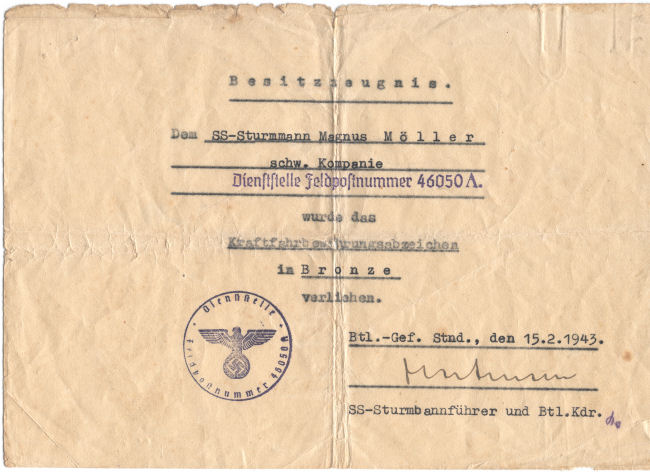
But merely in order to have something to start with, the Germans lent a small number of horses to the corps, and I became a mounted dispatch rider, while others became drivers. The intention, however, was that the corps should be motorised, and for this Denmark was to supply the vehicles. These were only made available in December 1941.
Thus, systematic training could not begin until after Christmas. Massell knew this but withheld it.
The winter of 1941–42 was exceptionally severe, and in February, when driving school and the motorisation training took place, there was a period of 42 degrees of frost. Nevertheless, instruction was almost completed when Schalburg took over command.
It is true that Kryssing did not profess National Socialism, but as he himself said, this should not be necessary in order to fight against Soviet power. He did, however, allow Nazi propaganda, which was more than Schalburg did.
Schalburg stated: “We have no time for politics and propaganda. This war must above all be won.”
But the claim that both officers and enlisted men wanted Kryssing replaced as commander can hardly be correct—they were not asked—but when Reichsführer Himmler desired it, one had to comply.
When Schalburg took over the corps, as the saying goes, “a new broom sweeps clean.” First the German inspection officers were dismissed, including Massell. Those who wished to remain could do so, but then had to perform ordinary service.
Drills and training took place both day and night, in which I participated as a dispatch rider. In that capacity I had previously had the opportunity to speak with Kryssing a few times. He was always friendly and correct, but spoke only about official matters.
It was quite different with Schalburg. Because I spoke reasonably good German, I often acted as a link between the German and Danish officers. Schalburg called me his favourite messenger (“Melder” being the German word for dispatch rider) and said: “We’ll wait with the Iron Cross until we reach the front.”
Another problem that contributed to prolonging the training period was the “heavy weapons,” which of course had to be supplied by the Germans. Infantry and anti-tank guns were only received in March 1942.
This was so late that it was impossible to train Danish personnel in their use; therefore, in March 1942, 4th Company was reinforced with a number of German enlisted men, as well as German platoon leaders, including Untersturmführer Stenger, who later became company commander when Martinsen replaced Schalburg after he was killed on 2 June 1942.
From this it can be seen that the delay in the Free Corps’ readiness for the front was by no means due to Kryssing, but to a large extent to German indecision, combined with similar factors on the Danish side.
To conclude my account of my relations with the commanders of the Free Corps: because I knew German, I was transferred to 4th Company at the same time as the German personnel joined, and there assigned to the company’s German “Schirmmeister” (chief mechanic), where I served as a motorcycle mechanic, including during operations near Lake Ilmen, but mostly as a dispatch rider for the company commander Stenger.
When the Free Corps was deployed in the winter of 1942–43 in the vicinity of Velikiye Luki, I was fully assigned to Stenger, but from time to time loaned to the staff, meaning the commander: Sturmbannführer Martinsen.
I experienced Martinsen as a very jovial person. When I had been out on a difficult mission—once on a motorcycle in a snowstorm and 36 degrees of frost—and brought Martinsen a situation report, it sometimes happened that he would say: “Well then, thank you, and you can return to your quarters, but shouldn’t we just have a schnapps together first?”
Martinsen was well liked by the men, but later lost their trust when he returned home and took over the leadership of the Schalburg Corps.
In the Free Corps we knew that there was gradually growing unrest against the Germans at home, but we also knew that our politicians had almost “welcomed them with open arms” when they arrived in 1940. The Danish “bread-and-butter politicians” had promised the Germans to ensure peace and order for as long as the occupation lasted, and therefore we considered it treacherous when anyone interfered in such matters. The unrest was the Danish government’s problem, and it could only be misunderstood if we involved ourselves in such disputes.
Kryssing was not, as Krüger proposed, transferred to Wiking, but to the SS Division Totenkopf and remained on the northern sector of the Eastern Front for the rest of the war.
He ended his career as a major general, and was thus not quite as incompetent as the “National Socialists” claimed.
After the war he was held in British captivity, where he was informed that “his” Free Corps men were, against all expectations, being arrested one by one as they returned home. He secured his own repatriation in order, through his permissions and agreements, to put an end to the situation.
The judge in Gråsten did not wish to arrest him, but was ordered to hold him for one day, and within that time he was collected by car from Copenhagen, where he was sentenced to eight years in prison for having done what the government had encouraged him to do and for which he had received the King’s permission.
Kryssing lost his two sons, who were killed in the war; his wife, who was a front-line nurse, was seriously wounded; and he was deprived of his pension after more than 30 years of service in the Danish army.
Who said, “Ingratitude is the world’s reward?”
Magnus Møller